
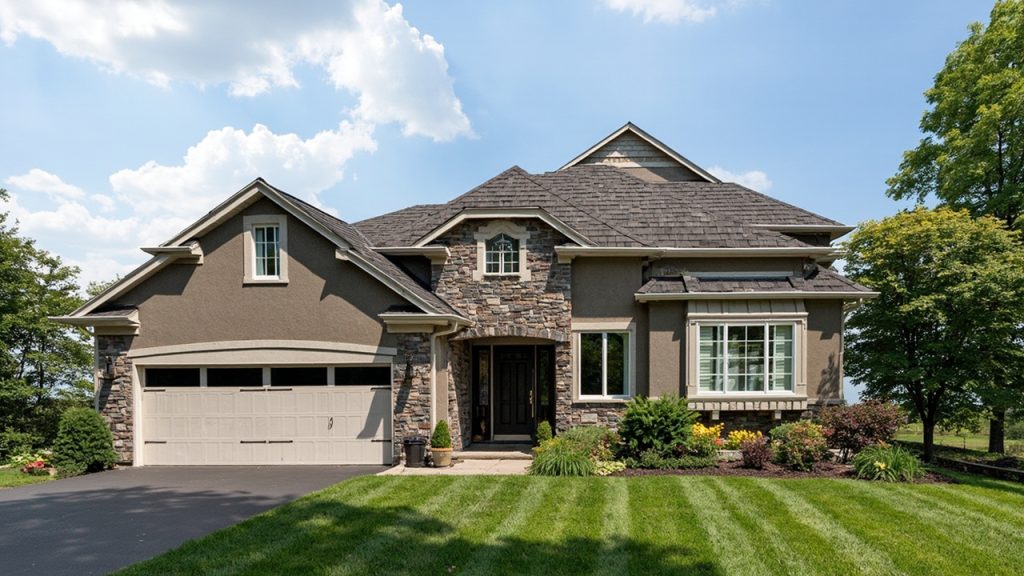
Comparing Synthetic Slate and Traditional Shingles for Your Moreland Hills Estate
Choosing between synthetic slate and traditional asphalt shingles represents one of the most important decisions for your Moreland Hills estate. The right roofing material protects your investment from Cleveland’s harsh weather while enhancing your home’s architectural beauty. This guide breaks down the essential differences between these two popular options so you can make the best choice for your property. This Old House roofing guide.
Key Differences at a Glance
Before diving into the details here’s how synthetic slate and traditional shingles stack up across the most important factors:
| Feature | Synthetic Slate | Traditional Asphalt |
|---|---|---|
| Expected Lifespan | 50+ years | 20-30 years |
| Initial Cost | Higher | Lower |
| Weight | Medium (lighter than real slate) | Light |
| Impact Resistance | Class 4 (highest) | Class 3-4 |
| Wind Rating | Up to 110 mph | Up to 130 mph |
What Makes Synthetic Slate Different
Synthetic slate roofing consists of engineered polymer materials designed to mimic the appearance of natural slate. Manufacturers use advanced molding techniques to create tiles that capture the subtle color variations and texture of authentic stone. The polymer composition offers several advantages over both natural slate and traditional shingles.
The manufacturing process allows for consistent thickness and precise dimensions across all tiles. This uniformity simplifies installation and creates a more cohesive appearance once completed. The material resists cracking from impact and handles freeze-thaw cycles without the delamination issues that plague natural slate.
Synthetic slate weighs significantly less than natural slate typically around 300 pounds per square compared to 800-1,500 pounds for real slate. This reduced weight means most homes in Moreland Hills can support synthetic slate without structural reinforcement.
Traditional Asphalt Shingles Explained
Asphalt shingles remain the most common roofing material in Northeast Ohio for good reason. These three-tab or architectural shingles consist of a fiberglass mat coated with asphalt and embedded with ceramic granules. The technology has evolved significantly over decades offering improved durability and weather resistance.
Modern architectural shingles feature multiple layers of material that create a dimensional appearance. This construction provides better wind resistance than older three-tab designs and often includes special adhesive strips that seal the shingles together during hot weather.
The manufacturing process allows for various color options and styles that complement different architectural designs. From traditional black to weathered wood tones asphalt shingles offer flexibility in achieving your desired aesthetic.
Performance During Cleveland Winters
Cleveland’s winter weather creates unique challenges for roofing materials. Lake-effect snow ice dam formation and freeze-thaw cycles test the durability of any roofing system.
Synthetic slate handles ice and snow exceptionally well. The smooth surface allows snow to slide off more easily than asphalt reducing the weight load on your roof. The material’s resistance to freeze-thaw damage means it maintains its integrity through multiple winter seasons without cracking or splitting.
Asphalt shingles face more stress during winter months. Ice dam formation can force water underneath the shingles potentially causing leaks. The repeated freezing and thawing can cause the asphalt to become brittle over time especially in older installations.
Both materials require proper ice and water shield installation in valleys and along eaves. However synthetic slate’s Class 4 impact rating provides superior protection against hail damage that often accompanies winter storms.
Cost Analysis for Moreland Hills Properties
Understanding the total cost of ownership helps you make the right investment decision. Here’s what affects the pricing for both materials in the Moreland Hills area:
| Cost Factor | Synthetic Slate | Traditional Asphalt |
|---|---|---|
| Material Cost per Square | $$$-$$$$ | $-$$ |
| Installation Time | 3-5 days | 1-2 days |
| Structural Modifications | Rarely needed | None |
| Expected Replacement | Never (lifetime product) | 1-2 times over 50 years |
| Long-term Value | Synthetic Slate | Traditional Asphalt |
|---|---|---|
| Energy Efficiency | Better insulation properties | Standard insulation |
| Property Value Impact | Increases value by 5-10% | Standard value maintenance |
| Insurance Premiums | Often lower due to durability | Standard rates |
The higher upfront cost of synthetic slate often pays for itself through eliminated replacement expenses and potential energy savings. Many Moreland Hills homeowners find the investment worthwhile for properties valued over $500,000.
Aesthetic Impact on Your Estate
Your roof significantly influences your home’s curb appeal and market value. Moreland Hills features many elegant estates where the roof serves as a defining architectural element.
Synthetic slate provides the sophisticated appearance of natural stone without the maintenance headaches. The material captures the subtle color variations and textures that make slate roofs so distinctive. This authenticity particularly suits the Colonial Tudor and Mediterranean-style homes common in the area.
Asphalt shingles offer versatility in color and style. Architectural shingles can mimic the dimensional look of wood shakes or create clean contemporary lines. However they lack the premium appearance that synthetic slate provides for high-end properties.
Local historic districts near Shaker Heights often require slate-like materials. Synthetic slate typically meets these requirements while providing better durability than natural slate.
Installation Timeline and Process
The installation process differs significantly between these materials affecting your timeline and the disruption to your household.
Synthetic slate installation requires specialized training and experience. The process typically follows these steps:
- Roof deck inspection and repair
- Underlayment installation with enhanced ice and water shield
- Starter strip placement along eaves
- Tile installation working from bottom to top
- Flashing and detail work around chimneys and valleys
- Final inspection and cleanup
The entire process usually takes 3-5 days for an average estate in Moreland Hills. Weather delays can extend this timeline during Cleveland’s unpredictable spring and fall seasons.
Asphalt shingle installation moves more quickly typically completing in 1-2 days. The simpler installation process means more contractors can handle the job potentially reducing labor costs.
Making Your Final Decision
Several factors should guide your roofing material selection for your Moreland Hills estate:
- Property Value: Homes over $500,000 typically justify synthetic slate’s premium cost
- Architectural Style: Traditional designs benefit more from slate’s classic appearance
- Long-term Plans: Synthetic slate makes more sense if you plan to stay 15+ years
- Budget Constraints: Asphalt shingles work well for tighter budgets or investment properties
- Local Regulations: Check with your HOA or historic district guidelines
Consider scheduling a professional roof inspection to assess your current structure’s condition. This evaluation helps determine if any repairs or modifications are needed before installation.
Both materials perform well in Cleveland’s climate when properly installed. The key is matching the material to your specific needs budget and property characteristics.
Ready to upgrade your Moreland Hills estate with the perfect roofing solution? Contact our team for a detailed consultation and estimate tailored to your property’s unique requirements.
Frequently Asked Questions
How long does synthetic slate last compared to asphalt shingles?
Synthetic slate typically lasts 50+ years while asphalt shingles need replacement every 20-30 years. This means synthetic slate may be the last roof you ever need to purchase for your Moreland Hills estate.
Can my current roof structure support synthetic slate?
Most homes in Moreland Hills can support synthetic slate without reinforcement. The material weighs about one-third as much as natural slate making it suitable for standard roof structures.
Does synthetic slate cost more than asphalt shingles?
Yes synthetic slate costs significantly more upfront. However when you factor in the longer lifespan and eliminated replacement costs the lifetime cost often becomes comparable or even lower than multiple asphalt shingle installations.
Which material handles Cleveland’s snow better?
Synthetic slate performs better in heavy snow conditions. Its smooth surface allows snow to slide off more easily and the material resists damage from freeze-thaw cycles that can crack asphalt shingles over time.
Will synthetic slate increase my home’s value?
Synthetic slate typically increases property value due to its premium appearance and longevity. Many Moreland Hills buyers view it as a desirable feature that sets properties apart in the luxury market.
How long does installation take for each material?
Asphalt shingles install in 1-2 days while synthetic slate requires 3-5 days. The longer timeline for synthetic slate reflects the specialized installation process needed for optimal performance.
{
“@context”: “https://schema.org”,
“@type”: “BlogPosting”,
“headline”: “Comparing Synthetic Slate and Traditional Shingles for Your Moreland Hills Estate”,
“description”: “Discover the key differences between synthetic slate and traditional asphalt shingles for your Moreland Hills estate. Compare costs, durability, and aesthetics to make the right choice.”,
“wordCount”: 1298,
“datePublished”: “2026-03-27T14:45:00.000Z”,
“dateModified”: “2026-03-27T14:45:00.000Z”,
“inLanguage”: “en-US”,
“mainEntityOfPage”: {
“@type”: “WebPage”,
“@id”: “https://alpharoofingcleveland.com”
},
“publisher”: {
“@type”: “LocalBusiness”,
“name”: “Alpha Roofing Cleveland”,
“url”: “https://alpharoofingcleveland.com”
},
“author”: {
“@type”: “Organization”,
“name”: “Alpha Roofing Cleveland”,
“url”: “https://alpharoofingcleveland.com”
},
“image”: {
“@type”: “ImageObject”,
“url”: “https://alpharoofingcleveland.com/wp-content/uploads/2026/03/comparing-synthetic-slate-and-traditional-shingles-1.jpg”
}
}
{
“@context”: “https://schema.org”,
“@type”: “RoofingContractor”,
“name”: “Alpha Roofing Cleveland”,
“url”: “https://alpharoofingcleveland.com”,
“address”: {
“@type”: “PostalAddress”,
“addressLocality”: “Cleveland”
},
“areaServed”: {
“@type”: “City”,
“name”: “Cleveland”
}
}
{
“@context”: “https://schema.org”,
“@type”: “FAQPage”,
“mainEntity”: [
{
“@type”: “Question”,
“name”: “How long does synthetic slate last compared to asphalt shingles?”,
“acceptedAnswer”: {
“@type”: “Answer”,
“text”: “Synthetic slate typically lasts 50+ years while asphalt shingles need replacement every 20-30 years. This means synthetic slate may be the last roof you ever need to purchase for your Moreland Hills estate.”
}
},
{
“@type”: “Question”,
“name”: “Can my current roof structure support synthetic slate?”,
“acceptedAnswer”: {
“@type”: “Answer”,
“text”: “Most homes in Moreland Hills can support synthetic slate without reinforcement. The material weighs about one-third as much as natural slate making it suitable for standard roof structures.”
}
},
{
“@type”: “Question”,
“name”: “Does synthetic slate cost more than asphalt shingles?”,
“acceptedAnswer”: {
“@type”: “Answer”,
“text”: “Yes synthetic slate costs significantly more upfront. However when you factor in the longer lifespan and eliminated replacement costs the lifetime cost often becomes comparable or even lower than multiple asphalt shingle installations.”
}
},
{
“@type”: “Question”,
“name”: “Which material handles Cleveland’s snow better?”,
“acceptedAnswer”: {
“@type”: “Answer”,
“text”: “Synthetic slate performs better in heavy snow conditions. Its smooth surface allows snow to slide off more easily and the material resists damage from freeze-thaw cycles that can crack asphalt shingles over time.”
}
},
{
“@type”: “Question”,
“name”: “Will synthetic slate increase my home’s value?”,
“acceptedAnswer”: {
“@type”: “Answer”,
“text”: “Synthetic slate typically increases property value due to its premium appearance and longevity. Many Moreland Hills buyers view it as a desirable feature that sets properties apart in the luxury market.”
}
},
{
“@type”: “Question”,
“name”: “How long does installation take for each material?”,
“acceptedAnswer”: {
“@type”: “Answer”,
“text”: “Asphalt shingles install in 1-2 days while synthetic slate requires 3-5 days. The longer timeline for synthetic slate reflects the specialized installation process needed for optimal performance.”
}
}
]
}
{
“@context”: “https://schema.org”,
“@type”: “BreadcrumbList”,
“itemListElement”: [
{
“@type”: “ListItem”,
“position”: 1,
“name”: “Home”,
“item”: “https://alpharoofingcleveland.com”
},
{
“@type”: “ListItem”,
“position”: 2,
“name”: “Blog”,
“item”: “https://alpharoofingcleveland.com/blog”
},
{
“@type”: “ListItem”,
“position”: 3,
“name”: “Comparing Synthetic Slate and Traditional Shingles for Your Moreland Hills Estate”
}
]
}
{
“@context”: “https://schema.org”,
“@type”: “Service”,
“serviceType”: “Roofing”,
“provider”: {
“@type”: “LocalBusiness”,
“name”: “Alpha Roofing Cleveland”,
“url”: “https://alpharoofingcleveland.com”
},
“areaServed”: {
“@type”: “City”,
“name”: “Cleveland”
},
“description”: “Discover the key differences between synthetic slate and traditional asphalt shingles for your Moreland Hills estate. Compare costs, durability, and aesthetics to make the right choice.”
}
For more information, visit HouseLogic roofing materials comparison. For more information, visit Consumer Reports roofing buying guide.