
The Best Ways to Manage Constant Branch Debris and Gutter Clutter in the Wooded Lots of Forest Hill
Living in Forest Hill means enjoying mature trees and natural beauty but also dealing with constant leaf fall twig accumulation and clogged gutters. The dense canopy that makes your property so attractive also creates year-round maintenance challenges that can damage your roof if left unmanaged. Understanding how to handle this debris effectively protects your home investment and prevents costly repairs.
Forest Hill sits within Cleveland’s “Forest City” environment where towering oaks maples and pines drop everything from acorns to helicopter seeds. This constant bombardment creates unique problems for homeowners. Debris builds up in valleys along roof edges and especially in gutters where it traps moisture accelerates shingle deterioration and adds dangerous weight during winter storms.
Why Wooded Lots Need Special Debris Management
Wooded properties face debris challenges that clear lots never experience. Trees overhanging your roof drop leaves needles and small branches throughout all seasons. Spring brings seed pods and flower debris summer storms drop twigs and fall delivers the heaviest leaf volume. Even winter contributes with ice-laden branches that break off.
The real danger comes from accumulation. Wet leaves form heavy mats that trap moisture against shingles. Pine needles create acidic pockets that eat through roofing materials. Small debris works into shingle seams causing granule loss and creating entry points for water. During Cleveland’s freeze-thaw cycles this trapped moisture expands and contracts breaking down roofing materials much faster than normal weathering.
Understanding Your Local Tree Canopy
Forest Hill and surrounding eastern suburbs like Shaker Heights and Cleveland Heights share similar tree compositions. Oak trees dominate many properties dropping heavy leaves and acorns that can dent softer roofing materials. Silver maples produce those annoying helicopter seeds that seem to get everywhere including deep into gutter systems. White pines contribute acidic needles that break down roofing granules and create perfect conditions for moss growth.
Each tree species creates different debris patterns. Oaks drop most of their leaves in fall but also shed throughout winter during storms. Maples produce spring seed pods and fall leaves with the helicopters being particularly problematic for gutter clogs. Pines drop needles year-round with heaviest shedding in spring creating acidic buildup that damages asphalt shingles over time.
The Impact of Cleveland Weather on Debris Management
Cleveland’s climate creates perfect conditions for debris-related roof damage. Lake-effect snow falls heavily on properties already burdened with wet leaves and pine needles. The weight can stress roof structures and create ice dams where melting snow gets trapped by debris-filled gutters. Freeze-thaw cycles common in January and February expand trapped moisture breaking down roofing materials.
Summer humidity in July and August promotes moss and algae growth on shaded north-facing slopes where debris accumulates. These organisms feed on the organic matter trapped on your roof while their root systems penetrate shingle surfaces. Fall’s heavy rains in October wash debris into already clogged gutters creating overflow that damages fascia boards and creates foundation problems around your home.
Essential Debris Management Strategies
Managing wooded lot debris requires a systematic approach combining prevention removal and protection. Start with tree canopy management by trimming branches that overhang your roof to a minimum of six feet. This reduces debris volume by up to 70 percent while still maintaining your property’s wooded character. Focus on removing dead or diseased branches that are most likely to fall during storms.
Install high-quality gutter guards designed for heavy debris areas. Not all gutter guards work equally well in wooded environments. Micro-mesh systems block even the smallest debris while allowing water to flow through. Reverse curve systems work well for larger leaves but may struggle with pine needles and seed pods common in Forest Hill.
Establish a regular cleaning schedule based on your specific tree coverage. Properties with 75 percent or more canopy coverage need cleaning every three months minimum. Fall requires special attention with cleanup needed in late October and again in November after most leaves have dropped. Spring cleaning in April removes winter debris and prepares your roof for summer storms.
Professional vs. DIY Debris Removal
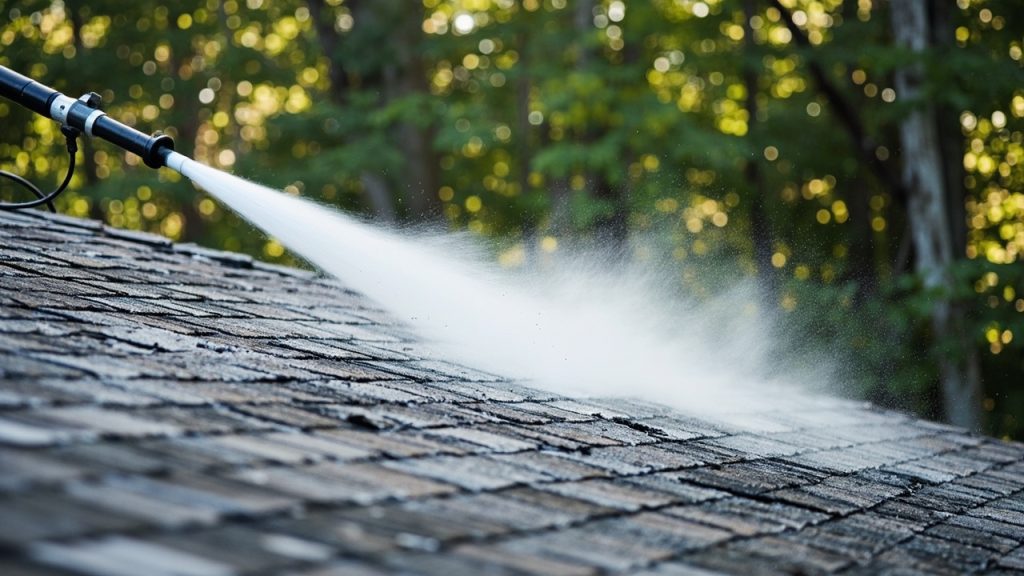
DIY debris removal works for single-story homes with gentle slopes but wooded lot maintenance often requires professional equipment and expertise. Professionals use soft-wash systems that remove debris without damaging shingles. They also inspect for damage while cleaning something DIY homeowners often miss until leaks develop.
Safety represents the biggest concern for DIY attempts. Working on roofs covered with wet leaves creates slip hazards. Climbing ladders around mature trees with low-hanging branches increases fall risks. Professionals use proper safety equipment and have experience navigating these challenging environments.
Cost factors into the decision but consider long-term savings. Professional cleaning at $300 to $500 per visit prevents thousands in water damage repairs. Many companies offer annual contracts that reduce per-visit costs while ensuring consistent maintenance throughout the year.
Seasonal Debris Management Calendar
Creating a seasonal calendar helps you stay ahead of debris problems. Spring cleanup focuses on removing winter debris including fallen branches and accumulated leaves. This is also the time to inspect for winter damage and apply moss prevention treatments.
Summer maintenance involves light cleaning after severe storms and checking for early signs of moss or algae growth. Trim any branches damaged by spring storms before they become hazards. Fall represents the busiest season with multiple cleanups needed as leaves drop in waves.
Winter preparation in late November includes final gutter cleaning and inspection before snow arrives. Remove any remaining leaves and check that gutter guards are functioning properly. This preparation prevents ice dam formation and reduces spring cleanup needs.
Equipment and Tools for Debris Management
Effective debris management requires specific tools for different situations. Leaf blowers with variable speed controls work well for dry debris on accessible areas. Use lower speeds near shingles to prevent granule loss. Extension wands allow you to reach debris in valleys without walking on the roof.
Soft washing systems use low-pressure water combined with cleaning solutions to remove organic growth and stuck debris. These systems work especially well for moss and algae removal without damaging roofing materials. Telescoping brushes help with stubborn debris in tight areas.
Gutter cleaning tools include specialized tongs for reaching deep into downspouts and wet/dry vacuums for removing sludge from gutter bottoms. Always use proper safety equipment including non-slip shoes gloves and eye protection when working around debris.
Preventing Long-Term Damage
Beyond regular cleaning several strategies prevent long-term debris damage. Install zinc or copper strips near roof peaks. When it rains these metals release ions that inhibit moss and algae growth. This works particularly well in Forest Hill’s humid climate where organic growth thrives.
Consider roof treatment applications every few years. These treatments clean and protect roofing materials from organic growth and UV damage. They work best when applied after thorough cleaning when the roof surface is completely free of debris.
Monitor your attic for signs of moisture problems. Proper ventilation prevents moisture buildup that accelerates debris-related damage. Check for dark spots on rafters which indicate water infiltration from roof problems.
Common Mistakes to Avoid
Many homeowners make critical errors when managing wooded lot debris. Using high-pressure washers strips shingle granules and voids warranties. Walking on roofs covered with wet leaves creates slip hazards and can damage shingles. Waiting until debris completely covers the roof makes removal much harder and increases damage risk.
Another mistake involves ignoring gutter guards that claim to be maintenance-free. Even the best systems need occasional cleaning especially in wooded areas. Neglecting to trim overhanging branches guarantees ongoing debris problems regardless of other prevention measures.
Finally many homeowners underestimate the importance of timing. Waiting until late fall means dealing with wet heavy leaves that are much harder to remove than dry ones. Regular light maintenance prevents the major headaches of seasonal catch-up cleaning.
When to Call Professionals
Certain situations demand professional help regardless of your DIY comfort level. Multi-story homes create dangerous working conditions for inexperienced homeowners. Severe roof slopes over 7:12 pitch make walking on the roof extremely hazardous especially when covered with debris.
Storm damage requires immediate professional assessment. Fallen branches may have damaged underlying roofing materials that aren’t visible from the ground. Water stains on interior ceilings indicate problems that need expert diagnosis before they worsen.
Professional help also makes sense when you lack time or physical ability to maintain your roof properly. The cost of professional service often pales compared to water damage repairs from neglected maintenance.
Protecting Your Investment
Your roof represents one of your home’s most important investments. In wooded lots like those found throughout Forest Hill proper debris management extends roof life by five to ten years compared to neglected properties. This translates to thousands in avoided replacement costs.
Regular maintenance also protects your home’s interior from water damage. Roof leaks cause everything from ceiling stains to structural rot. They create perfect conditions for mold growth which poses health risks to your family. The small cost of debris management prevents these major problems.
Finally well-maintained homes retain value better than those showing signs of neglect. Potential buyers notice roof condition and may reduce offers or walk away from properties with visible debris problems. Consistent maintenance protects your investment when it’s time to sell.
Creating Your Debris Management Plan
Start by assessing your specific situation. Count the number and types of trees near your home. Note which directions your roof slopes face since north-facing slopes stay wetter and need more frequent cleaning. Consider your physical ability to perform maintenance safely.
Develop a realistic schedule based on your findings. Most wooded properties need professional cleaning twice yearly with DIY touchups as needed. Budget for this maintenance just as you would for lawn care or other home services.
Document your maintenance activities including dates and any problems found. This record helps track patterns and proves you’ve maintained the property properly for warranty claims or when selling your home.
Local Resources and Support
Forest Hill residents benefit from several local resources for debris management. The Cleveland Metroparks offers tree care workshops and can recommend certified arborists for major trimming work. The EPA provides information on proper disposal of yard waste and organic debris.
Local hardware stores in Shaker Heights and Cleveland Heights stock debris management tools suited for our specific tree species and climate conditions. Many offer tool rental programs for specialized equipment you might only need occasionally.
Neighborhood associations often share information about reliable service providers and may coordinate group rates for tree trimming or debris removal services during community cleanup events.
Frequently Asked Questions
How often should I clean my gutters in a wooded lot?
Properties with heavy tree coverage need gutter cleaning every three to four months minimum. Fall may require monthly cleaning as leaves drop. Watch for overflow during rains which indicates clogged gutters needing immediate attention.
Can debris really damage my roof that quickly?
Yes. Wet leaves trap moisture against shingles causing granule loss and material breakdown within months. Pine needles create acidic conditions that eat through roofing materials. The weight of accumulated debris plus snow can stress roof structures.
What’s the best time of year for major debris cleanup?
Late October through early November works best for most properties. This timing catches most leaves after they’ve dropped but before they get wet and heavy. Spring cleanup in April removes winter debris and prepares for summer storms.
Are gutter guards worth the investment?
For wooded properties absolutely. Quality gutter guards reduce cleaning frequency by 70 to 80 percent while preventing overflow damage. Choose guards designed for heavy debris areas rather than standard residential models.
How do I know if I need professional help?
Call professionals for multi-story homes steep slopes or when you notice interior water stains. Also consider professional service if you lack time for regular maintenance or feel unsafe working on ladders around trees.
Will regular cleaning extend my roof’s lifespan?
Definitely. Proper debris management can add five to ten years to roof life by preventing moisture damage granule loss and organic growth. This protection often pays for itself through avoided replacement costs.
{
“@context”: “https://schema.org”,
“@type”: “BlogPosting”,
“headline”: “The Best Ways to Manage Constant Branch Debris and Gutter Clutter in the Wooded Lots of Forest Hill”,
“description”: “Struggling with constant branch debris and clogged gutters in your Forest Hill wooded lot? Learn proven methods to protect your roof from damage year-round.”,
“wordCount”: 2008,
“datePublished”: “2026-05-23T08:09:00.000Z”,
“dateModified”: “2026-05-23T08:09:00.000Z”,
“inLanguage”: “en-US”,
“mainEntityOfPage”: {
“@type”: “WebPage”,
“@id”: “https://alpharoofingcleveland.com”
},
“publisher”: {
“@type”: “LocalBusiness”,
“name”: “Alpha Roofing Cleveland”,
“url”: “https://alpharoofingcleveland.com”
},
“author”: {
“@type”: “Organization”,
“name”: “Alpha Roofing Cleveland”,
“url”: “https://alpharoofingcleveland.com”
},
“image”: {
“@type”: “ImageObject”,
“url”: “https://alpharoofingcleveland.com/wp-content/uploads/2026/03/the-best-ways-to-manage-constant-branch-debris-and-1.jpg”
}
}
{
“@context”: “https://schema.org”,
“@type”: “RoofingContractor”,
“name”: “Alpha Roofing Cleveland”,
“url”: “https://alpharoofingcleveland.com”,
“address”: {
“@type”: “PostalAddress”,
“addressLocality”: “Cleveland”
},
“areaServed”: {
“@type”: “City”,
“name”: “Cleveland”
}
}
{
“@context”: “https://schema.org”,
“@type”: “FAQPage”,
“mainEntity”: [
{
“@type”: “Question”,
“name”: “How often should I clean my gutters in a wooded lot?”,
“acceptedAnswer”: {
“@type”: “Answer”,
“text”: “Properties with heavy tree coverage need gutter cleaning every three to four months minimum. Fall may require monthly cleaning as leaves drop. Watch for overflow during rains which indicates clogged gutters needing immediate attention.”
}
},
{
“@type”: “Question”,
“name”: “Can debris really damage my roof that quickly?”,
“acceptedAnswer”: {
“@type”: “Answer”,
“text”: “Yes. Wet leaves trap moisture against shingles causing granule loss and material breakdown within months. Pine needles create acidic conditions that eat through roofing materials. The weight of accumulated debris plus snow can stress roof structures.”
}
},
{
“@type”: “Question”,
“name”: “What’s the best time of year for major debris cleanup?”,
“acceptedAnswer”: {
“@type”: “Answer”,
“text”: “Late October through early November works best for most properties. This timing catches most leaves after they’ve dropped but before they get wet and heavy. Spring cleanup in April removes winter debris and prepares for summer storms.”
}
},
{
“@type”: “Question”,
“name”: “Are gutter guards worth the investment?”,
“acceptedAnswer”: {
“@type”: “Answer”,
“text”: “For wooded properties absolutely. Quality gutter guards reduce cleaning frequency by 70 to 80 percent while preventing overflow damage. Choose guards designed for heavy debris areas rather than standard residential models.”
}
},
{
“@type”: “Question”,
“name”: “How do I know if I need professional help?”,
“acceptedAnswer”: {
“@type”: “Answer”,
“text”: “Call professionals for multi-story homes steep slopes or when you notice interior water stains. Also consider professional service if you lack time for regular maintenance or feel unsafe working on ladders around trees.”
}
},
{
“@type”: “Question”,
“name”: “Will regular cleaning extend my roof’s lifespan?”,
“acceptedAnswer”: {
“@type”: “Answer”,
“text”: “Definitely. Proper debris management can add five to ten years to roof life by preventing moisture damage granule loss and organic growth. This protection often pays for itself through avoided replacement costs.”
}
}
]
}
{
“@context”: “https://schema.org”,
“@type”: “BreadcrumbList”,
“itemListElement”: [
{
“@type”: “ListItem”,
“position”: 1,
“name”: “Home”,
“item”: “https://alpharoofingcleveland.com”
},
{
“@type”: “ListItem”,
“position”: 2,
“name”: “Blog”,
“item”: “https://alpharoofingcleveland.com/blog”
},
{
“@type”: “ListItem”,
“position”: 3,
“name”: “The Best Ways to Manage Constant Branch Debris and Gutter Clutter in the Wooded Lots of Forest Hill”
}
]
}
{
“@context”: “https://schema.org”,
“@type”: “Service”,
“serviceType”: “Roofing”,
“provider”: {
“@type”: “LocalBusiness”,
“name”: “Alpha Roofing Cleveland”,
“url”: “https://alpharoofingcleveland.com”
},
“areaServed”: {
“@type”: “City”,
“name”: “Cleveland”
},
“description”: “Struggling with constant branch debris and clogged gutters in your Forest Hill wooded lot? Learn proven methods to protect your roof from damage year-round.”
}