
How to Spot Subtle Winter Damage on Your Strongsville Roof Once the Snow Finally Melts
After months of heavy snow and freezing temperatures in Northeast Ohio the first warm days of spring bring a critical task for homeowners. Ice dams snow load and freeze-thaw cycles can create hidden damage that only becomes visible once the snow melts. This guide walks you through the key signs to check for on your Strongsville roof and helps you decide when to call a professional.
Why Cleveland Winters Create Unique Roof Stress
Strongsville sits in the heart of the Great Lakes snow belt. The combination of lake-effect snow from Lake Erie and frequent freeze-thaw cycles creates conditions that other regions rarely see. When daytime temperatures rise above freezing and nighttime temperatures plummet moisture seeps into tiny cracks in shingles and flashing. This water expands when it freezes widening those cracks over time. The result is damage that builds slowly but can cause major leaks once spring rains arrive.
Ice dams form when heat escaping from your attic melts snow on the roof. The water runs down to the colder eaves and refreezes creating a barrier. This forces water back up under shingles where it can penetrate your home. The weight of heavy snow also stresses roof structures especially on older homes common in neighborhoods like North Royalton and Parma.
Exterior Inspection from the Ground
Start your inspection from the ground using binoculars if needed. Look for missing or damaged shingles. Strong winds off Lake Erie can lift shingle edges creating gaps where water enters. Check for shingles that appear darker than surrounding ones. This often indicates granule loss where the protective coating has worn away.
Granules in your gutters or at downspout outlets signal advanced shingle wear. These ceramic particles protect shingles from UV rays. Without them shingles become brittle and fail faster. Pay special attention to south-facing slopes where sun exposure accelerates deterioration.
Examine flashing around chimneys vents and skylights. Winter ice can bend or crack metal flashing. Look for signs of separation where flashing meets the roof surface. Even hairline gaps can allow significant water intrusion during spring storms. EPA mold and indoor air quality guidelines.
Check for sagging areas especially near the roof edges. Snow load can cause rafters to bow creating low spots where water pools. This is particularly common on homes built in the 1970s and 1980s in Strongsville’s older subdivisions.
The Attic Audit: Interior Signs of Winter Damage
The attic reveals what the roof exterior cannot show. Start by checking for water stains on the underside of the roof deck. These appear as dark or discolored patches. Even small stains indicate active leaks that need immediate attention.
Look for daylight coming through the roof boards. Any pinpricks of light mean holes exist in your roofing system. These often start as nail holes that expand with freeze-thaw cycles.
Check for mold or mildew growth on rafters and insulation. Winter moisture trapped in attics creates ideal conditions for mold. The musty smell often precedes visible growth by weeks.
Examine attic ventilation. Blocked soffit vents from ice or snow prevent proper airflow. This leads to condensation that mimics leak damage. Proper ventilation is critical in Cleveland’s humid continental climate.
Gutter and Downspout Evaluation
Heavy snow and ice can pull gutters away from the fascia board. Check for gaps between gutters and the roof edge. Even slight separations allow water to run behind gutters instead of into them.
Look for sagging sections in your gutter runs. The weight of ice can bend aluminum gutters creating low spots where water pools. This leads to overflow during spring rains.
Check downspout connections. Ice can separate these joints allowing water to leak at connection points. Make sure downspouts direct water at least five feet from your foundation.
Clear any remaining debris from gutters. Material left from fall creates ice dams that worsen winter damage. Clean gutters also help you spot damage you might otherwise miss.
Advanced Inspection Techniques
Test shingle flexibility by gently bending a corner of several shingles. Healthy shingles bend without cracking. Brittle shingles that snap or crack need replacement. This test is particularly telling for asphalt shingles common in Strongsville homes.
Check for popped nails or screws on visible roof surfaces. These create entry points for water. Winter expansion and contraction often pushes fasteners up through the roofing material.
Examine roof valleys where two roof planes meet. These areas handle the most water flow and suffer the most winter wear. Look for shingle deterioration or exposed underlayment.
Check for animal damage. Squirrels and raccoons often create entry points during winter when food is scarce. Look for chew marks or nesting material in roof corners.
Professional vs. DIY: When to Call a Cleveland Roofer
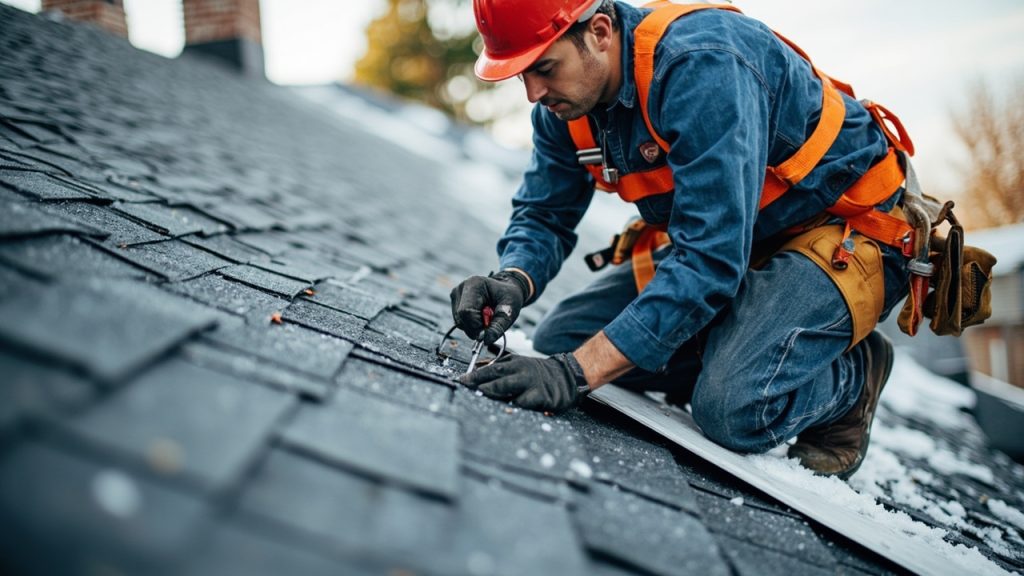
Ground-level inspections identify obvious damage but miss critical issues. A professional roofer uses safety equipment to walk your roof and check areas you cannot see. They also have moisture meters to detect water intrusion behind walls.
Call a professional if you spot any of these signs: multiple missing shingles, visible sagging, daylight through roof boards, or water stains on interior ceilings. These indicate structural issues requiring immediate attention.
Professional inspections cost between $150 and $300 in the Cleveland area. This fee often applies toward repairs if you hire the same company. The inspection can identify problems before they cause thousands in interior damage.
Insurance claims for winter storm damage must be filed within specific timeframes. Ohio homeowners typically have one year from the damage date to file claims. Document all damage with photos before making repairs.
Material-Specific Winter Damage
Asphalt shingles dominate Strongsville neighborhoods due to their cost-effectiveness. These shingles suffer granule loss and cracking in Cleveland winters. Three-tab shingles show damage faster than architectural shingles but both need inspection.
Metal roofs handle snow well but flashing connections can fail. Check seams and fasteners for separation. Metal expands and contracts more than other materials creating unique stress points.
Tile and slate roofs rarely appear in newer Strongsville developments but exist in older areas. These materials resist water but can crack from ice expansion. Check for broken pieces especially along roof edges.
Flat roofs on commercial buildings in North Olmsted and surrounding areas face different challenges. Ponding water from melting snow indicates drainage issues. Check for membrane blistering or separation at seams.
Prevention Strategies for Next Winter
Improve attic insulation to prevent ice dams. The U.S. Department of Energy recommends R-49 to R-60 insulation in Cleveland’s climate zone. Proper insulation keeps your roof cold preventing snow melt.
Install heated cables along roof edges in problem areas. These prevent ice dam formation but require professional installation to avoid fire hazards.
Trim tree branches that hang over your roof. Ice accumulation makes branches heavy enough to damage shingles when they fall. Keep branches at least six feet from roof surfaces.
Schedule professional gutter cleaning in late fall. Clean gutters handle spring runoff better and resist ice dam formation. Consider installing gutter guards to reduce maintenance.
Cost Considerations
Minor repairs like replacing a few shingles cost $150 to $400. Extensive damage requiring deck replacement runs $500 to $2000. Full roof replacement for an average Strongsville home ranges from $8000 to $15000 depending on materials.
Emergency repairs after spring storms cost 30 to 50 percent more than scheduled work. Water damage to interiors adds significant costs. A $500 roof repair can prevent $5000 in ceiling and wall repairs.
Many Cleveland roofers offer seasonal inspection packages. These include fall preparation and spring assessment for $200 to $300 annually. The cost savings from early problem detection often pay for the service.
Local Building Code Requirements
Cuyahoga County requires ice and water shield in specific roof areas. This waterproof membrane must extend at least 24 inches inside the exterior wall line. Homes in Strongsville built before 2010 may lack this critical protection.
Roofing permits cost $50 to $100 in Strongsville. Most roof replacements require permits regardless of the reason. Unpermitted work can cause insurance claim denials if damage occurs.
Wind resistance ratings matter in Cleveland’s frequent storm systems. Class H shingles rated for 150 mph winds provide better protection than standard Class 30 shingles. The small additional cost provides significant protection.
Environmental Factors
Cleveland’s humid continental climate creates year-round roof challenges. Summer humidity promotes algae and moss growth on north-facing roof slopes. These organisms retain moisture accelerating shingle deterioration.
Pollution from Cleveland’s industrial areas settles on roofs creating acidic compounds. These accelerate metal corrosion and break down roofing materials. Homes near major roads experience faster deterioration from road salt and vehicle emissions.
Freeze-thaw cycles in early spring cause the most damage. Temperature swings of 30 to 40 degrees in a single day expand and contract roofing materials. This stress reveals weaknesses that snow cover hid all winter.
Red Flags Requiring Immediate Action
Ceiling stains that grow larger after rain indicate active leaks. Water follows the path of least resistance often traveling along rafters before dripping. The stain location rarely matches the roof leak location.
Bulging drywall or ceiling texture signals trapped water. This creates collapse risk and requires immediate professional attention. Do not puncture bulges as this can cause sudden water release.
Musty odors in upper floors suggest hidden mold growth. Winter moisture creates ideal conditions for mold behind walls and in attics. Professional mold remediation costs $500 to $6000 depending on extent.
Increased energy bills after winter can indicate ventilation problems. Heat escaping through the roof melts snow creating ice dams. This forces HVAC systems to work harder maintaining indoor temperatures.
Creating Your Inspection Checklist
Document your findings with photos and notes. This creates a baseline for future inspections and helps professionals diagnose problems. Include date weather conditions and specific locations of concerns.
Prioritize repairs based on severity and cost. Active leaks and structural damage need immediate attention. Cosmetic issues like minor granule loss can wait until scheduled maintenance.
Consider your long-term plans for the home. If you plan to sell within five years address visible issues that affect curb appeal. Buyers and home inspectors notice roof condition immediately.
Build relationships with local roofing professionals before emergencies occur. Companies familiar with your home history provide better service and may offer priority scheduling.
Frequently Asked Questions
How soon after snow melts should I inspect my roof?
Inspect within one week of complete snowmelt. This allows you to catch damage before spring rains begin. Early inspection also gives you time to schedule repairs before roofing companies get busy.
Can I walk on my roof to inspect it myself?
Roof walking requires safety equipment and experience. Wet spring roofs are slippery and steep slopes create fall risks. Use binoculars from the ground or hire a professional with proper safety gear.
What’s the most common winter damage in Strongsville?
Ice dam damage ranks first followed by wind damage to shingles. The freeze-thaw cycles unique to Northeast Ohio cause more gradual deterioration than single-event damage like hail.
How long do asphalt shingles typically last in Cleveland?
Quality asphalt shingles last 20 to 25 years in Cleveland’s climate. Harsh winters and humid summers reduce lifespan compared to milder regions. Regular maintenance can extend life by five to seven years.
Should I replace my entire roof or just repair damaged areas?
Replace if damage exceeds 30 percent of total roof area or if shingles are near their expected lifespan. Spot repairs work for isolated damage on newer roofs. A professional inspection helps determine the best approach.
Does homeowners insurance cover winter roof damage?
Insurance covers sudden damage from specific events like wind or fallen trees. It typically excludes gradual deterioration from age or lack of maintenance. Document damage thoroughly and file claims promptly.
How can I prevent ice dams next winter?
Improve attic insulation and ventilation to keep roof surfaces cold. Remove snow from lower roof edges with a roof rake after heavy storms. Professional heat cable installation helps in problem areas.
What should I ask a roofer during a spring inspection?
Ask about their experience with Cleveland winters and local building codes. Request photos of any damage found and explanations of recommended repairs. Get written estimates and check references from local homeowners.
Are roof inspections necessary if I don’t see any problems?
Yes. Many serious issues like minor leaks or ventilation problems remain hidden until they cause major damage. Annual inspections cost less than emergency repairs and extend roof life significantly.
How do I choose between roofing companies?
Verify licensing and insurance. Check online reviews focusing on local references. Ask about warranties and get detailed written estimates. Choose companies with physical Cleveland-area locations rather than storm chasers.
Next Steps for Strongsville Homeowners
Start your inspection this weekend while weather remains mild. Document findings and prioritize repairs. For active leaks or structural concerns contact a licensed Cleveland roofer immediately. Early action prevents costly interior damage and extends your roof’s lifespan through many more Northeast Ohio winters.
Remember that your roof protects everything inside your home. The few hours spent inspecting now can save thousands in emergency repairs later. Strongsville’s unique climate demands attention to detail that other regions rarely require.
Ready to schedule a professional inspection? Contact a local roofing company with Cleveland-area experience. They understand the specific challenges Strongsville homes face and can recommend solutions that work in our unique climate.
Your roof weathered another Cleveland winter. Now ensure it’s ready for spring storms and summer heat. The peace of mind from a secure roof proves worth every minute of inspection time.
{
“@context”: “https://schema.org”,
“@type”: “BlogPosting”,
“headline”: “How to Spot Subtle Winter Damage on Your Strongsville Roof Once the Snow Finally Melts”,
“description”: “Learn to identify hidden winter roof damage in Strongsville homes after snowmelt. Discover critical signs of ice dam damage, flashing issues, and when to call a Cleveland roofer.”,
“wordCount”: 2233,
“datePublished”: “2026-05-23T13:36:00.000Z”,
“dateModified”: “2026-05-23T13:36:00.000Z”,
“inLanguage”: “en-US”,
“mainEntityOfPage”: {
“@type”: “WebPage”,
“@id”: “https://alpharoofingcleveland.com”
},
“publisher”: {
“@type”: “LocalBusiness”,
“name”: “Alpha Roofing Cleveland”,
“url”: “https://alpharoofingcleveland.com”
},
“author”: {
“@type”: “Organization”,
“name”: “Alpha Roofing Cleveland”,
“url”: “https://alpharoofingcleveland.com”
},
“image”: {
“@type”: “ImageObject”,
“url”: “https://alpharoofingcleveland.com/wp-content/uploads/2026/03/how-to-spot-subtle-winter-damage-on-your-strongsvi-1.jpg”
}
}
{
“@context”: “https://schema.org”,
“@type”: “RoofingContractor”,
“name”: “Alpha Roofing Cleveland”,
“url”: “https://alpharoofingcleveland.com”,
“address”: {
“@type”: “PostalAddress”,
“addressLocality”: “Cleveland”
},
“areaServed”: {
“@type”: “City”,
“name”: “Cleveland”
}
}
{
“@context”: “https://schema.org”,
“@type”: “FAQPage”,
“mainEntity”: [
{
“@type”: “Question”,
“name”: “How soon after snow melts should I inspect my roof?”,
“acceptedAnswer”: {
“@type”: “Answer”,
“text”: “Inspect within one week of complete snowmelt. This allows you to catch damage before spring rains begin. Early inspection also gives you time to schedule repairs before roofing companies get busy.”
}
},
{
“@type”: “Question”,
“name”: “Can I walk on my roof to inspect it myself?”,
“acceptedAnswer”: {
“@type”: “Answer”,
“text”: “Roof walking requires safety equipment and experience. Wet spring roofs are slippery and steep slopes create fall risks. Use binoculars from the ground or hire a professional with proper safety gear.”
}
},
{
“@type”: “Question”,
“name”: “What’s the most common winter damage in Strongsville?”,
“acceptedAnswer”: {
“@type”: “Answer”,
“text”: “Ice dam damage ranks first followed by wind damage to shingles. The freeze-thaw cycles unique to Northeast Ohio cause more gradual deterioration than single-event damage like hail.”
}
},
{
“@type”: “Question”,
“name”: “How long do asphalt shingles typically last in Cleveland?”,
“acceptedAnswer”: {
“@type”: “Answer”,
“text”: “Quality asphalt shingles last 20 to 25 years in Cleveland’s climate. Harsh winters and humid summers reduce lifespan compared to milder regions. Regular maintenance can extend life by five to seven years.”
}
},
{
“@type”: “Question”,
“name”: “Should I replace my entire roof or just repair damaged areas?”,
“acceptedAnswer”: {
“@type”: “Answer”,
“text”: “Replace if damage exceeds 30 percent of total roof area or if shingles are near their expected lifespan. Spot repairs work for isolated damage on newer roofs. A professional inspection helps determine the best approach.”
}
},
{
“@type”: “Question”,
“name”: “Does homeowners insurance cover winter roof damage?”,
“acceptedAnswer”: {
“@type”: “Answer”,
“text”: “Insurance covers sudden damage from specific events like wind or fallen trees. It typically excludes gradual deterioration from age or lack of maintenance. Document damage thoroughly and file claims promptly.”
}
},
{
“@type”: “Question”,
“name”: “How can I prevent ice dams next winter?”,
“acceptedAnswer”: {
“@type”: “Answer”,
“text”: “Improve attic insulation and ventilation to keep roof surfaces cold. Remove snow from lower roof edges with a roof rake after heavy storms. Professional heat cable installation helps in problem areas.”
}
},
{
“@type”: “Question”,
“name”: “What should I ask a roofer during a spring inspection?”,
“acceptedAnswer”: {
“@type”: “Answer”,
“text”: “Ask about their experience with Cleveland winters and local building codes. Request photos of any damage found and explanations of recommended repairs. Get written estimates and check references from local homeowners.”
}
},
{
“@type”: “Question”,
“name”: “Are roof inspections necessary if I don’t see any problems?”,
“acceptedAnswer”: {
“@type”: “Answer”,
“text”: “Yes. Many serious issues like minor leaks or ventilation problems remain hidden until they cause major damage. Annual inspections cost less than emergency repairs and extend roof life significantly.”
}
},
{
“@type”: “Question”,
“name”: “How do I choose between roofing companies?”,
“acceptedAnswer”: {
“@type”: “Answer”,
“text”: “Verify licensing and insurance. Check online reviews focusing on local references. Ask about warranties and get detailed written estimates. Choose companies with physical Cleveland-area locations rather than storm chasers.”
}
}
]
}
{
“@context”: “https://schema.org”,
“@type”: “BreadcrumbList”,
“itemListElement”: [
{
“@type”: “ListItem”,
“position”: 1,
“name”: “Home”,
“item”: “https://alpharoofingcleveland.com”
},
{
“@type”: “ListItem”,
“position”: 2,
“name”: “Blog”,
“item”: “https://alpharoofingcleveland.com/blog”
},
{
“@type”: “ListItem”,
“position”: 3,
“name”: “How to Spot Subtle Winter Damage on Your Strongsville Roof Once the Snow Finally Melts”
}
]
}
{
“@context”: “https://schema.org”,
“@type”: “Service”,
“serviceType”: “Roofing”,
“provider”: {
“@type”: “LocalBusiness”,
“name”: “Alpha Roofing Cleveland”,
“url”: “https://alpharoofingcleveland.com”
},
“areaServed”: {
“@type”: “City”,
“name”: “Cleveland”
},
“description”: “Learn to identify hidden winter roof damage in Strongsville homes after snowmelt. Discover critical signs of ice dam damage, flashing issues, and when to call a Cleveland roofer.”
}
For more information, visit FEMA winter weather home protection guide.