
The Best Way to Handle Moss and Algae Growth on Shaded Lyndhurst Rooftops
Living in Lyndhurst means dealing with mature trees and shaded rooftops that create perfect conditions for moss and algae growth. These organisms don’t just look bad. They can seriously damage your shingles and shorten your roof’s lifespan by 5 to 10 years if left untreated.
The humid summers and lake effect moisture from Lake Erie create an environment where moss and algae thrive on shaded surfaces. Once these organisms take hold they trap moisture against your shingles causing them to deteriorate faster than normal. This leads to curling cracking and eventual roof failure.
Understanding how to safely remove moss and algae while protecting your roof investment is essential for every Lyndhurst homeowner. The right approach uses specialized cleaning methods that kill these organisms without damaging your shingles.
Why Lyndhurst Homes Face Unique Moss Challenges
Lyndhurst’s tree-lined streets and mature canopy create beautiful neighborhoods but also provide the shade and moisture that moss and algae need to grow. The area’s average humidity levels combined with limited direct sunlight on north-facing roofs create ideal growing conditions.
Common algae species like Gloeocapsa magma appear as black streaks on shingles while moss forms green fuzzy patches that hold water against the surface. These organisms feed on the limestone filler in asphalt shingles making them particularly destructive to your roof’s structure. Asphalt Roofing Manufacturers Association.
Local weather patterns including frequent rainfall and high humidity levels accelerate moss growth. Homes near Acacia Reservation or those with large oak or maple trees face even higher risk due to increased shade and organic debris that provides nutrients for these organisms.
The Soft Washing Advantage Over Pressure Washing
Many homeowners don’t realize that high-pressure washing can destroy asphalt shingles. The intense water pressure strips away protective granules and can force water under shingles causing leaks. This damage often voids manufacturer warranties and leads to expensive repairs. EPA information on sodium hypochlorite.
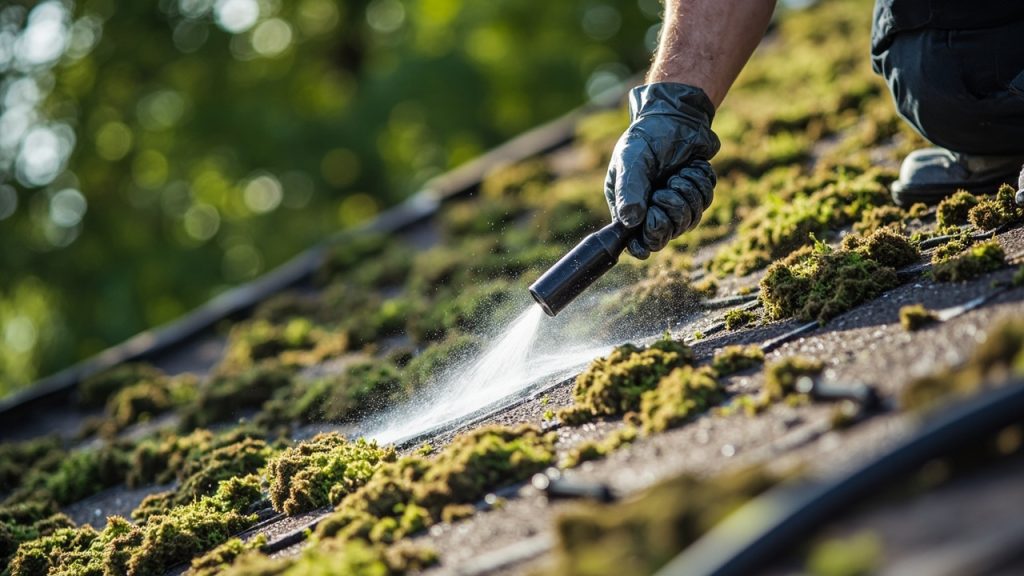
Soft washing uses specialized equipment that delivers cleaning solutions at gentle pressure typically under 100 PSI. This method effectively kills moss and algae without damaging shingles. The process involves applying biodegradable surfactants that penetrate and eliminate the organisms at their roots.
Professional soft washing includes applying moss inhibitors that prevent regrowth for up to two years. These treatments contain zinc or copper compounds that create an environment where moss and algae cannot thrive. The process protects your landscaping while ensuring complete removal of harmful organisms.
Protecting Your Lyndhurst Home Investment
A roof represents one of the largest investments in your home. Moss and algae growth can reduce your roof’s effective lifespan by 30 to 50 percent. For a typical 25-year shingle roof this means replacing it in 15 years instead of 25 years.
The cost difference is significant. Roof replacement for an average Lyndhurst home costs between $8000 and $15000 while professional moss removal and treatment costs $400 to $800. This makes preventive maintenance a smart financial decision.
Beyond the financial impact moss and algae can cause structural damage. The moisture trapped by these organisms can lead to wood rot under shingles and create conditions for mold growth in your attic. This secondary damage often costs thousands to repair.
Professional Moss Removal Process
Professional moss removal follows a specific process that ensures complete elimination without damage. The first step involves inspecting your roof to identify the extent of growth and any existing damage. Technicians then protect landscaping and prepare the work area.
The cleaning solution is applied using specialized low-pressure equipment. This solution typically contains sodium hypochlorite mixed with surfactants that break down the moss and algae. The solution needs to dwell on the surface for 15 to 20 minutes to ensure complete penetration.
After the dwell time technicians perform a gentle rinse using garden hose pressure. This removes dead moss and algae without damaging shingles. The final step involves applying preventative treatments that inhibit future growth.
Preventing Future Moss Growth
Prevention is more effective than repeated cleaning. Installing zinc or copper strips along roof ridges creates a natural barrier against moss and algae. When it rains these metals release ions that flow down the roof creating conditions where organisms cannot survive.
Trimming tree branches that overhang your roof reduces shade and allows more sunlight to reach the surface. This natural drying effect makes your roof less hospitable to moss and algae. Removing organic debris like leaves and twigs also eliminates food sources for these organisms.
Improving attic ventilation helps prevent moisture buildup that contributes to moss growth. Proper ventilation keeps your roof deck dry and reduces the humidity that moss and algae need to thrive.
Understanding Local Building Considerations
Cuyahoga County building codes require specific installation practices that affect moss prevention. Ice and water shield requirements for the Cleveland area include extending protection 24 inches inside the exterior wall line. This creates a moisture barrier that helps prevent the conditions moss needs to grow.
Many Lyndhurst homes feature architectural styles common to the area including Colonial and Tudor Revival designs. These roof styles with their multiple valleys and dormers create areas where moisture can collect making them particularly susceptible to moss growth.
Local roofing materials must meet specific standards for wind resistance given the area’s exposure to Lake Erie weather patterns. These standards ensure your roof can withstand the environmental stresses that contribute to moss and algae problems.
Environmental Safety Considerations
Professional moss removal uses environmentally safe cleaning solutions that won’t harm your pets or landscaping. The biodegradable surfactants break down naturally without leaving harmful residues. Technicians take precautions to protect plants by pre-wetting vegetation and covering sensitive areas.
The cleaning solutions used are registered with the EPA and meet all safety standards for residential use. These products effectively eliminate moss and algae while being safe for the surrounding environment. The runoff is controlled to prevent any negative impact on local waterways.
Many homeowners worry about the impact of cleaning chemicals on their property. Professional services use controlled application methods and proper dilution ratios to ensure safety while achieving effective results.
Cost Factors and ROI Analysis
The cost of moss removal depends on several factors including roof size accessibility and the extent of growth. A typical two-story home with moderate moss growth costs between $500 and $700 for complete removal and treatment. Steeper roofs or those with extensive growth may cost more.
Comparing this to roof replacement costs shows the value of preventive maintenance. A new roof costs $8000 to $15000 while extending your current roof’s life by five years through proper maintenance represents significant savings.
The return on investment becomes clear when considering that moss damage often leads to more expensive repairs. Addressing the problem early prevents the secondary damage that can occur when moisture penetrates under damaged shingles.
Common Mistakes to Avoid
Many homeowners attempt DIY moss removal using pressure washers or harsh chemicals. This often causes more damage than the original problem. Pressure washing strips granules from shingles and can create leaks that require expensive repairs.
Using bleach or other household chemicals may kill surface moss but doesn’t address the root system. These treatments also can damage landscaping and create safety hazards for pets and children.
Ignoring moss growth allows the problem to worsen. What starts as a small patch can spread across your entire roof within one growing season. Early intervention prevents the need for more extensive and expensive treatments later.
Seasonal Timing for Best Results
The best time for moss removal in Lyndhurst is during the growing season when temperatures are consistently above 50 degrees. This typically means late spring through early fall. During this time the cleaning solutions work most effectively and the moss is actively growing.
Fall treatments help prevent winter damage when ice and snow can exacerbate existing problems. Spring treatments address any growth that occurred during winter months and prepare your roof for the humid summer season.
Annual inspections help identify problems before they become severe. Many homeowners schedule moss prevention treatments every two years to maintain their roof’s appearance and integrity.
Frequently Asked Questions
How long does professional moss removal take?
Most residential moss removal projects take 2 to 4 hours depending on roof size and the extent of growth. The actual cleaning process takes about an hour while setup and protection of landscaping adds additional time.
Will my roof look immediately clean after treatment?
Not necessarily. The cleaning solution kills the moss and algae but dead organisms may remain visible for several weeks. Rain gradually washes away the dead material revealing a clean surface underneath.
Can I stay in my home during the cleaning process?
Yes. The cleaning solutions and equipment are safe for use around occupied homes. Technicians take precautions to minimize noise and disruption during the process.
How often should I have my roof inspected for moss?
Annual inspections are recommended especially if your home has mature trees or faces north. Early detection prevents extensive growth and reduces treatment costs.
Does moss removal affect my roof warranty?
Professional moss removal using approved methods does not void manufacturer warranties. In fact many warranty documents require regular maintenance to remain valid.
What happens if it rains after treatment?
Light rain within 24 hours of treatment is not a problem. The cleaning solutions need to remain on the surface for at least 15 minutes to be effective. Heavy rain immediately after application may require a follow-up treatment.
Can moss grow back after professional removal?
Yes but much more slowly. Professional treatments include inhibitors that prevent rapid regrowth. Most homes need retreatment every 2 to 3 years depending on environmental conditions.
Is moss removal covered by homeowners insurance?
Routine maintenance like moss removal is typically not covered by insurance. However if moss damage leads to leaks or other covered perils some policies may provide partial coverage.
How do I know if I have moss or just dirt on my roof?
Moss appears as green fuzzy patches that hold moisture and feel slightly spongy. Algae creates black streaks that don’t have texture. Dirt appears as brown or gray discoloration without the distinctive patterns of moss or algae.
What’s the difference between moss and algae?
Moss is a plant that grows in patches and holds water against your roof. Algae is a simple organism that creates black streaks but doesn’t hold significant moisture. Both can damage shingles but moss is generally more destructive.
Choosing the Right Professional Service
Selecting a qualified moss removal service requires careful consideration. Look for companies with specific experience in soft washing techniques and knowledge of local building codes. Verify they carry proper insurance and can provide references from other Lyndhurst homeowners.
Professional services should provide detailed written estimates that outline the entire process including any necessary repairs. They should explain their cleaning methods and guarantee their work. Avoid companies that use high-pressure washing or cannot explain their treatment process.
The right service will take time to inspect your roof thoroughly and recommend a treatment plan specific to your situation. They should address any concerns about landscaping pets or warranty implications before beginning work.
Local Lyndhurst Success Stories
Many Lyndhurst homeowners have successfully addressed moss problems through professional treatment. Homes near Green Road and Richmond Road have seen dramatic improvements after professional cleaning. These properties often featured extensive moss growth due to mature tree canopies and north-facing exposures.
Properties in the Moreland neighborhood have benefited from preventative treatments that have kept roofs clean for multiple seasons. These success stories demonstrate how proper treatment and prevention can protect your roof investment while maintaining your home’s curb appeal.
Commercial properties in the area including local shopping centers have also benefited from professional moss management programs. These larger scale treatments show how the same principles apply whether you’re protecting a family home or a business property.
Taking Action to Protect Your Roof
Moss and algae growth on your Lyndhurst roof is not just a cosmetic issue. It’s a sign of potential damage that can lead to expensive repairs if ignored. The humid climate and mature tree canopy in our area create conditions where these organisms thrive.
Professional soft washing provides the safest most effective solution for eliminating moss and algae while protecting your shingles. This approach kills the organisms at their roots without the damage caused by pressure washing or harsh chemicals.
Don’t wait until moss damage requires expensive roof replacement. A simple inspection can determine if your roof needs treatment. Most homeowners find that preventive maintenance costs a fraction of replacement while extending their roof’s useful life by years.
Your roof protects everything inside your home. Taking action against moss and algae growth is one of the smartest investments you can make in your property’s long-term value and your family’s comfort.
Ready to Protect Your Lyndhurst Roof
Don’t let moss and algae damage your roof and reduce your home’s value. Professional treatment can restore your roof’s appearance and protect it from further damage. The sooner you address the problem the less expensive the solution will be.
Contact a qualified roofing professional today for a free roof inspection. They can assess your specific situation and recommend the best approach for your home. With proper treatment and prevention you can enjoy a clean attractive roof that protects your home for years to come.
Take the first step toward protecting your Lyndhurst home. Schedule your roof inspection now and join the many local homeowners who have already solved their moss problems through professional treatment.
{
“@context”: “https://schema.org”,
“@type”: “BlogPosting”,
“headline”: “The Best Way to Handle Moss and Algae Growth on Shaded Lyndhurst Rooftops”,
“description”: “Discover professional moss and algae removal for Lyndhurst, OH roofs. Learn why soft washing protects shingles and prevents costly damage in Cleveland’s humid climate.”,
“wordCount”: 2227,
“datePublished”: “2026-03-08T13:33:00.000Z”,
“dateModified”: “2026-03-08T13:33:00.000Z”,
“inLanguage”: “en-US”,
“mainEntityOfPage”: {
“@type”: “WebPage”,
“@id”: “https://alpharoofingcleveland.com”
},
“publisher”: {
“@type”: “LocalBusiness”,
“name”: “Alpha Roofing Cleveland”,
“url”: “https://alpharoofingcleveland.com”
},
“author”: {
“@type”: “Organization”,
“name”: “Alpha Roofing Cleveland”,
“url”: “https://alpharoofingcleveland.com”
},
“image”: {
“@type”: “ImageObject”,
“url”: “https://alpharoofingcleveland.com/wp-content/uploads/2026/03/the-best-way-to-handle-moss-and-algae-growth-on-sh-1-1.jpg”
}
}
{
“@context”: “https://schema.org”,
“@type”: “RoofingContractor”,
“name”: “Alpha Roofing Cleveland”,
“url”: “https://alpharoofingcleveland.com”,
“address”: {
“@type”: “PostalAddress”,
“addressLocality”: “Cleveland”
},
“areaServed”: {
“@type”: “City”,
“name”: “Cleveland”
}
}
{
“@context”: “https://schema.org”,
“@type”: “FAQPage”,
“mainEntity”: [
{
“@type”: “Question”,
“name”: “How long does professional moss removal take?”,
“acceptedAnswer”: {
“@type”: “Answer”,
“text”: “Most residential moss removal projects take 2 to 4 hours depending on roof size and the extent of growth. The actual cleaning process takes about an hour while setup and protection of landscaping adds additional time.”
}
},
{
“@type”: “Question”,
“name”: “Will my roof look immediately clean after treatment?”,
“acceptedAnswer”: {
“@type”: “Answer”,
“text”: “Not necessarily. The cleaning solution kills the moss and algae but dead organisms may remain visible for several weeks. Rain gradually washes away the dead material revealing a clean surface underneath.”
}
},
{
“@type”: “Question”,
“name”: “Can I stay in my home during the cleaning process?”,
“acceptedAnswer”: {
“@type”: “Answer”,
“text”: “Yes. The cleaning solutions and equipment are safe for use around occupied homes. Technicians take precautions to minimize noise and disruption during the process.”
}
},
{
“@type”: “Question”,
“name”: “How often should I have my roof inspected for moss?”,
“acceptedAnswer”: {
“@type”: “Answer”,
“text”: “Annual inspections are recommended especially if your home has mature trees or faces north. Early detection prevents extensive growth and reduces treatment costs.”
}
},
{
“@type”: “Question”,
“name”: “Does moss removal affect my roof warranty?”,
“acceptedAnswer”: {
“@type”: “Answer”,
“text”: “Professional moss removal using approved methods does not void manufacturer warranties. In fact many warranty documents require regular maintenance to remain valid.”
}
},
{
“@type”: “Question”,
“name”: “What happens if it rains after treatment?”,
“acceptedAnswer”: {
“@type”: “Answer”,
“text”: “Light rain within 24 hours of treatment is not a problem. The cleaning solutions need to remain on the surface for at least 15 minutes to be effective. Heavy rain immediately after application may require a follow-up treatment.”
}
},
{
“@type”: “Question”,
“name”: “Can moss grow back after professional removal?”,
“acceptedAnswer”: {
“@type”: “Answer”,
“text”: “Yes but much more slowly. Professional treatments include inhibitors that prevent rapid regrowth. Most homes need retreatment every 2 to 3 years depending on environmental conditions.”
}
},
{
“@type”: “Question”,
“name”: “Is moss removal covered by homeowners insurance?”,
“acceptedAnswer”: {
“@type”: “Answer”,
“text”: “Routine maintenance like moss removal is typically not covered by insurance. However if moss damage leads to leaks or other covered perils some policies may provide partial coverage.”
}
},
{
“@type”: “Question”,
“name”: “How do I know if I have moss or just dirt on my roof?”,
“acceptedAnswer”: {
“@type”: “Answer”,
“text”: “Moss appears as green fuzzy patches that hold moisture and feel slightly spongy. Algae creates black streaks that don’t have texture. Dirt appears as brown or gray discoloration without the distinctive patterns of moss or algae.”
}
},
{
“@type”: “Question”,
“name”: “What’s the difference between moss and algae?”,
“acceptedAnswer”: {
“@type”: “Answer”,
“text”: “Moss is a plant that grows in patches and holds water against your roof. Algae is a simple organism that creates black streaks but doesn’t hold significant moisture. Both can damage shingles but moss is generally more destructive.”
}
}
]
}
{
“@context”: “https://schema.org”,
“@type”: “BreadcrumbList”,
“itemListElement”: [
{
“@type”: “ListItem”,
“position”: 1,
“name”: “Home”,
“item”: “https://alpharoofingcleveland.com”
},
{
“@type”: “ListItem”,
“position”: 2,
“name”: “Blog”,
“item”: “https://alpharoofingcleveland.com/blog”
},
{
“@type”: “ListItem”,
“position”: 3,
“name”: “The Best Way to Handle Moss and Algae Growth on Shaded Lyndhurst Rooftops”
}
]
}
{
“@context”: “https://schema.org”,
“@type”: “Service”,
“serviceType”: “Roofing”,
“provider”: {
“@type”: “LocalBusiness”,
“name”: “Alpha Roofing Cleveland”,
“url”: “https://alpharoofingcleveland.com”
},
“areaServed”: {
“@type”: “City”,
“name”: “Cleveland”
},
“description”: “Discover professional moss and algae removal for Lyndhurst, OH roofs. Learn why soft washing protects shingles and prevents costly damage in Cleveland’s humid climate.”
}