
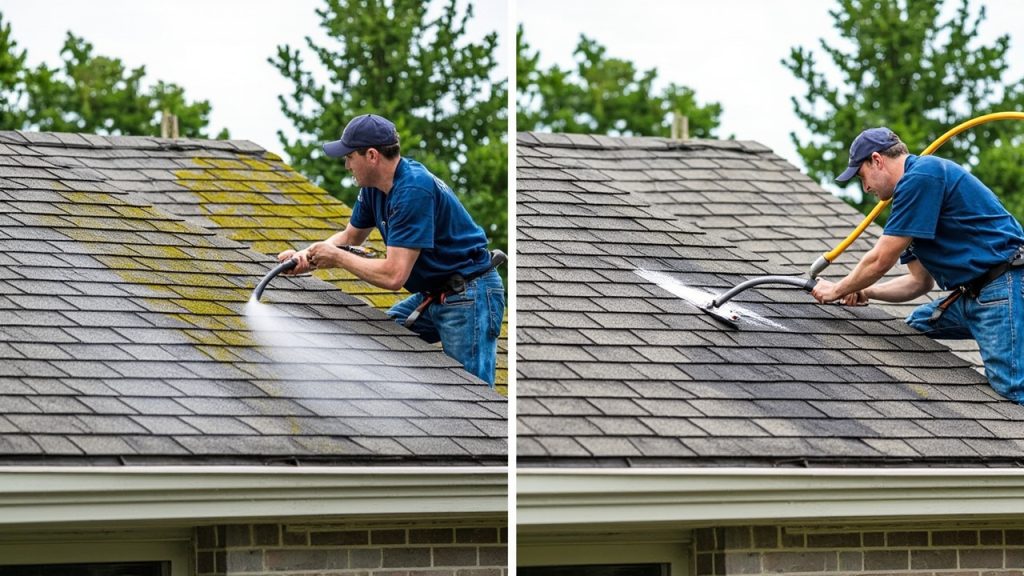
The Best Way to Handle Moss and Algae Growth on Shaded Lyndhurst Rooftops
Moss and algae growth on Lyndhurst rooftops presents a unique challenge for homeowners throughout Cuyahoga County. The combination of mature tree canopies, Lake Erie’s moisture influence, and shaded conditions creates the perfect environment for these organisms to thrive on asphalt shingles. Understanding the science behind this growth and implementing proper removal techniques can protect your roof’s integrity and extend its lifespan significantly. Asphalt Roofing Manufacturers Association.
Why Moss Thrives in Lyndhurst Neighborhoods
Lyndhurst’s tree-lined streets and established neighborhoods create conditions that accelerate moss and algae growth. The area receives substantial shade from mature oaks, maples, and other deciduous trees common throughout the 44124 zip code. These trees not only block direct sunlight but also drop organic debris that provides nutrients for moss spores.
The Lake Erie effect plays a crucial role in Lyndhurst’s moisture levels. Proximity to the lake means higher humidity throughout the year, especially during spring and fall when temperatures fluctuate. This moisture settles on rooftops and creates ideal conditions for Gloeocapsa magma, the bacteria responsible for black streaks on shingles.
Lyndhurst’s climate features frequent rainfall and extended periods of cloud cover. These conditions keep rooftops damp for longer periods, allowing moss to establish strong root systems in the microscopic gaps between shingle granules. Once established, moss can grow rapidly, particularly on north-facing slopes that receive minimal direct sunlight.
Local soil composition also contributes to the problem. The clay-rich soil in much of Cuyahoga County retains moisture and releases it into the air, creating a humid microclimate around homes. This humidity settles on rooftops and provides the water necessary for moss and algae to flourish.
Understanding Moss and Algae Biology
Moss consists of tiny plants that grow in dense green clumps or mats. These organisms absorb water through their leaves rather than roots, making them particularly well-suited for rooftop environments. Moss reproduces through spores that travel through the air and settle on damp surfaces.
Algae, specifically Gloeocapsa magma, appears as black or dark green streaks on shingles. This cyanobacteria feeds on the limestone filler in asphalt shingles and can spread rapidly across a roof surface. Unlike moss, algae doesn’t have roots but can still cause significant damage by breaking down shingle materials.
Both organisms thrive in environments with consistent moisture, moderate temperatures, and limited sunlight. Lyndhurst’s combination of these factors makes it particularly susceptible to moss and algae problems compared to sunnier, drier regions.
The damage caused by these organisms goes beyond aesthetics. Moss can lift shingles, creating gaps where water can penetrate the roof deck. Algae breaks down the protective granules on shingles, reducing their effectiveness and lifespan. Left untreated, both can lead to costly repairs or premature roof replacement.
The Safe Soft Wash Process for Lyndhurst Homes
Professional moss removal requires specialized techniques that clean effectively without damaging shingles. High-pressure washing, while tempting, can strip away protective granules and void manufacturer warranties. Instead, soft washing uses low-pressure application of cleaning solutions specifically formulated for roof surfaces.
The soft wash process begins with protecting surrounding landscaping. Biodegradable cleaning solutions are applied to the roof, targeting moss, algae, and lichen growth. These solutions typically contain sodium hypochlorite mixed with specialized surfactants that help the cleaning agents penetrate organic growth.
Application occurs at very low pressure, usually under 100 PSI, compared to traditional pressure washing that can exceed 3,000 PSI. This gentle approach ensures cleaning without damaging shingles or forcing water under the roofing material where it can cause leaks.
Treatment time varies based on the severity of growth. Light algae staining might require only a single application, while heavy moss growth often needs multiple treatments over several weeks. The cleaning solution kills the organisms at their roots, causing them to dry up and flake away naturally.
Post-treatment involves rinsing the roof with clean water at low pressure to remove dead organic material. This process reveals the clean shingle surface underneath and allows homeowners to see the immediate improvement in their roof’s appearance.
Protecting Your Home Investment
Moss and algae growth can significantly reduce your roof’s lifespan. Asphalt shingles typically last 20-30 years under ideal conditions, but moss growth can cut that lifespan by 5-10 years. The cost of professional cleaning represents a fraction of replacement costs, making it a smart investment for Lyndhurst homeowners.
Shingle manufacturers often void warranties if moss or algae damage occurs due to neglect. Regular maintenance and proper cleaning help maintain warranty coverage and protect your investment. Some manufacturers even recommend specific cleaning intervals based on local climate conditions.
The financial impact extends beyond replacement costs. Moss growth can lead to water infiltration, causing damage to attic insulation, ceiling materials, and personal belongings. Early intervention prevents these secondary damage costs that can multiply the expense of roof maintenance.
Energy efficiency also suffers when algae covers shingles. The dark streaks absorb more heat, increasing cooling costs during summer months. Clean shingles reflect more sunlight, helping maintain more consistent attic temperatures and reducing HVAC workload.
Property values can decline when moss and algae are visible from the street. First impressions matter in real estate, and a roof covered in growth suggests poor maintenance to potential buyers. Professional cleaning restores curb appeal and maintains property value.
Prevention Strategies for Lyndhurst Rooftops
Preventing moss and algae growth is more cost-effective than removal. Several strategies can help Lyndhurst homeowners maintain clean roofs and avoid the expense of repeated treatments. These methods work best when implemented as part of a comprehensive roof maintenance plan.
Zinc or copper strips installed near the roof peak release metal ions when it rains. These ions flow down the roof surface, creating an environment toxic to moss and algae. While effective, this method works best as a preventive measure rather than a cure for existing growth.
Tree trimming represents one of the most effective prevention strategies. Reducing shade by trimming back overhanging branches allows more sunlight to reach the roof surface. This increased exposure helps dry the roof faster after rain and inhibits moss growth.
Regular gutter cleaning prevents debris buildup that provides nutrients for moss. Clogged gutters also cause water to back up under shingles, creating the damp conditions moss needs to thrive. Lyndhurst’s mature trees mean gutters require more frequent cleaning than in newer developments.
Improving attic ventilation helps regulate roof temperature and moisture levels. Proper ventilation prevents the warm, moist air that rises from living spaces from condensing on the roof deck. This reduction in moisture makes the environment less hospitable for moss and algae.
Choosing algae-resistant shingles during replacement provides long-term protection. Many manufacturers now offer shingles with copper or zinc granules embedded in the surface. These specialized shingles resist algae growth and maintain their appearance longer than standard shingles.
Comparing Cleaning Methods
| Cleaning Method | Pressure Level | Effectiveness | Risk to Shingles |
|---|---|---|---|
| High-Pressure Washing | 3,000+ PSI | Immediate removal | High – strips granules |
| Soft Washing | Under 100 PSI | Gradual, thorough | Low – safe for shingles |
| Manual Scraping | N/A | Spot removal only | Very high – shingle damage |
Moss Growth Risk Factors
| Factor | Risk Level | Impact on Growth |
|---|---|---|
| Tree Coverage | High | Creates shade and drops debris |
| Roof Pitch | Medium | Low pitch retains more moisture |
| Age of Shingles | High | Older shingles have worn granules |
| Humidity Levels | High | Moisture promotes growth |
Environmental Considerations
Professional moss removal services in Lyndhurst prioritize environmental safety alongside cleaning effectiveness. The cleaning solutions used are biodegradable and won’t harm local landscaping when properly applied. Technicians take precautions to protect plants, grass, and trees around the home. Environmental Protection Agency.
Water runoff from roof cleaning contains dead organic material and cleaning agents. Professional services contain and properly dispose of this runoff to prevent contamination of local waterways. This is particularly important in Lyndhurst, where storm drains connect to local streams and eventually Lake Erie.
The environmental impact of roof cleaning extends beyond the immediate process. By extending roof life through proper maintenance, homeowners reduce the frequency of roof replacement. This reduction means fewer shingles in landfills and less manufacturing demand for new roofing materials.
Many Lyndhurst residents also maintain gardens and landscape features that could be affected by cleaning runoff. Professional services use protective barriers and controlled application to ensure cleaning solutions don’t damage valuable plantings or contaminate vegetable gardens.
The biodegradable nature of modern cleaning solutions means they break down naturally without leaving harmful residues. This approach protects not only the immediate property but also the broader Lyndhurst ecosystem that includes local wildlife and water systems.
Local Project Examples
Recent projects throughout Lyndhurst demonstrate the effectiveness of professional moss removal. Homes near the Acacia Reservation show dramatic improvements after treatment, with black streaks and green moss patches disappearing completely within weeks of application.
Properties in the Moreland neighborhood, known for its mature tree canopy, particularly benefit from regular maintenance. The combination of shade from century-old trees and Lyndhurst’s humid climate creates ideal conditions for moss growth, making professional cleaning a recurring necessity.
Commercial properties along Mayfield Road also require specialized attention. The larger roof areas and different architectural styles found in Lyndhurst’s business district present unique challenges that require experienced technicians familiar with local building codes and regulations.
Post-treatment monitoring shows that properly cleaned roofs in Lyndhurst maintain their appearance for 2-3 years before significant regrowth occurs. This timeline varies based on specific location, tree coverage, and local weather patterns during the treatment period.
Customer testimonials from the 44124 area consistently praise the dramatic visual improvement and the peace of mind that comes with knowing their roof is protected from moisture damage. Many report noticing reduced cooling costs and improved curb appeal after treatment.
Frequently Asked Questions
How long does the moss removal process take?
The actual application typically takes 2-4 hours for an average home, though severe growth may require multiple visits over several weeks to ensure complete removal.
Will the cleaning process damage my plants?
Professional services take extensive precautions to protect landscaping. Biodegradable solutions are used, and plants are rinsed before and after treatment to prevent any damage.
How soon will I see results?
Initial results appear within days as moss turns brown and begins to flake away. Complete removal and the full visual improvement typically take 2-4 weeks as dead material naturally washes away.
Is the cleaning solution safe for my pets?
Yes, when properly applied and rinsed, the cleaning solutions are safe for pets. Technicians recommend keeping pets indoors during the application and rinsing process for optimal safety.
How often should I have my roof cleaned?
Most Lyndhurst homes benefit from professional cleaning every 2-3 years, though homes with heavy tree coverage or north-facing slopes may need more frequent service.
Will cleaning void my roof warranty?
Professional soft washing using manufacturer-approved methods will not void your warranty. In fact, many manufacturers recommend periodic cleaning to maintain warranty coverage.
Choosing the Right Service Provider
Selecting a qualified moss removal service requires careful consideration. Experience with Lyndhurst’s specific climate conditions and building styles proves essential for effective treatment. Local companies understand the unique challenges posed by the area’s mature trees and Lake Erie moisture patterns.
Proper licensing and insurance protect homeowners from liability during the cleaning process. Professional services carry both general liability and workers’ compensation insurance, ensuring protection if accidents occur on your property.
References from other Lyndhurst homeowners provide valuable insight into a company’s reliability and quality of work. Local references mean the company understands the specific challenges of your neighborhood and can provide relevant examples of their work.
Written estimates should detail the specific cleaning method, products used, and expected timeline. This documentation helps homeowners compare services and understand exactly what they’re paying for before work begins.
Guarantees or warranties on workmanship demonstrate confidence in the service quality. Reputable companies stand behind their work and address any issues that arise after treatment, ensuring customer satisfaction and long-term roof protection.
Cost Factors for Lyndhurst Homeowners
Several factors influence the cost of professional moss removal in Lyndhurst. Roof size represents the primary cost determinant, with larger roofs requiring more cleaning solution and labor time. The pitch of the roof also affects pricing, as steeper roofs require additional safety equipment and labor.
The severity of moss and algae growth impacts the overall cost. Light staining requires less treatment time and fewer cleaning applications than heavy moss growth that has established deep root systems in the shingle surface.
Accessibility affects pricing as well. Homes with multiple stories or complex roof designs require additional equipment and labor time. The presence of features like skylights, chimneys, or solar panels can also increase the complexity and cost of treatment.
Geographic location within Lyndhurst influences pricing slightly. Homes in areas with heavier tree coverage or those more exposed to Lake Erie’s moisture may require more intensive treatment, affecting the overall cost.
Seasonal timing can impact pricing, with many companies offering discounts during slower periods. Spring and fall typically see the highest demand, while winter months might offer lower rates for homeowners willing to schedule during off-peak times.
Maintaining Results Long-Term
After professional cleaning, homeowners can take several steps to maintain their roof’s appearance and extend the time between professional treatments. Regular visual inspections help identify new growth early, when it’s easier and less expensive to address.
Keeping gutters clean prevents debris buildup that provides nutrients for moss. Lyndhurst’s mature trees mean gutters require cleaning at least twice yearly, with additional cleanings needed after major storms or during peak leaf fall seasons.
Prompt removal of leaves, twigs, and other debris from the roof surface prevents organic material from decomposing and creating the moist environment moss needs to establish itself. This simple maintenance task significantly extends the time between professional cleanings.
Monitoring for early signs of regrowth allows for spot treatment before problems become severe. Small patches of moss or algae can often be treated with homeowner-grade products before they spread across the entire roof surface.
Maintaining proper attic ventilation continues to play a crucial role in preventing moss growth. Good ventilation keeps the roof deck dry and reduces the humidity that promotes organic growth on the surface.
Local Climate Impact on Treatment Timing
Lyndhurst’s climate patterns influence the optimal timing for moss removal treatments. Spring cleaning, typically performed in April or May, removes winter growth and prepares the roof for summer weather. This timing also allows homeowners to address any damage that occurred during winter freeze-thaw cycles.
Fall treatments, usually scheduled for September or October, remove summer growth and prepare the roof for winter. This timing is particularly important in Lyndhurst, where winter moisture can accelerate moss growth if left untreated.
Summer treatments can be effective but require careful timing to avoid extreme heat. Cleaning solutions work best when temperatures are moderate, and the risk of rain disrupting the treatment process is lower.
Winter treatments are generally avoided due to freezing temperatures and the risk of ice formation. However, emergency situations involving active leaks might require winter intervention using specialized cold-weather techniques.
Local weather patterns also affect the duration of treatment effectiveness. Years with higher than average rainfall or humidity may see faster moss regrowth, while drier years extend the time between necessary treatments.
Understanding Warranty Coverage
Most asphalt shingle manufacturers provide specific guidelines regarding moss and algae growth in their warranty documentation. These guidelines typically require regular maintenance and specify approved cleaning methods to maintain warranty coverage.
High-pressure washing almost universally voids manufacturer warranties due to the damage it causes to shingle granules. Soft washing using manufacturer-approved methods preserves warranty coverage while effectively removing organic growth.
Some manufacturers offer algae-resistant shingles with extended warranties specifically covering algae staining. These specialized shingles contain copper or zinc granules that inhibit algae growth and maintain their appearance longer than standard shingles.
Documentation of professional cleaning services can support warranty claims by demonstrating proper maintenance. Many manufacturers require proof of regular maintenance when evaluating warranty claims related to premature aging or failure.
Understanding warranty terms helps homeowners make informed decisions about cleaning methods and timing. Some warranties require specific cleaning intervals or mandate the use of particular cleaning products to maintain coverage.
Safety Considerations for DIY Attempts
While professional moss removal offers the best results, some homeowners consider DIY approaches to save money. However, roof work presents significant safety hazards that require proper equipment and training to navigate safely.
Roof pitch creates fall hazards that amateur cleaners often underestimate. Even relatively gentle slopes become dangerous when wet, and the moss itself creates slippery conditions that increase fall risk substantially.
Improper use of cleaning chemicals poses health risks through skin contact, inhalation, or eye exposure. Professional technicians use protective equipment and understand safe handling procedures that most homeowners lack.
Incorrect application pressure can damage shingles even when using supposedly safe cleaning solutions. The difference between effective cleaning and shingle damage often lies in the experience of knowing exactly how much pressure to apply in different situations.
Environmental damage from DIY attempts can be substantial. Without proper containment and runoff control, cleaning solutions can kill landscaping, contaminate water sources, and create liability issues for homeowners.
The cost savings of DIY approaches rarely justify the risks involved. Professional services include insurance coverage, proper equipment, and experienced technicians who can complete the job safely and effectively.
Benefits of Professional Service
Professional moss removal services offer numerous advantages over DIY approaches or untrained contractors. Experience with Lyndhurst’s specific conditions means technicians understand local challenges and can provide targeted solutions that address the root causes of moss growth.
Professional equipment includes specialized low-pressure application systems that clean effectively without damaging shingles. These systems achieve better results than consumer-grade pressure washers while protecting the roof’s integrity and warranty coverage.
Insurance coverage protects homeowners from liability if accidents occur during the cleaning process. Professional companies carry comprehensive insurance that covers both property damage and worker injuries, providing peace of mind throughout the project.
Quality guarantees ensure customer satisfaction and provide recourse if problems arise after treatment. Reputable companies stand behind their work and address any issues that develop within the guarantee period.
Professional services include proper cleanup and disposal of organic material removed from the roof. This comprehensive approach leaves the property clean and prevents the spread of moss spores to other areas of the home or neighborhood.
Impact on Home Insurance
Insurance companies often view moss growth as a maintenance issue that can affect coverage. Some policies may deny claims related to water damage if moss growth is determined to have contributed to the problem through neglect.
Regular professional cleaning demonstrates proper maintenance to insurance providers. This documentation can be valuable when filing claims or when insurance companies evaluate the overall condition of the property.
Some insurance companies offer premium discounts for homes with well-maintained roofs. Professional cleaning records can support these discounts by providing evidence of ongoing maintenance and care.
Insurance adjusters often note the condition of roofs during property evaluations. Moss and algae growth can negatively impact these evaluations, potentially affecting coverage terms or premium rates.
Emergency repairs resulting from moss-related damage may have different coverage terms than damage from sudden, unexpected events. Understanding these distinctions helps homeowners make informed decisions about maintenance timing and methods.
Regional Comparison
Moss and algae problems vary significantly across different regions of the country. Lyndhurst’s issues stem primarily from moisture and shade, while other areas face different challenges based on their specific climate conditions.
Southern states often deal with algae growth due to high heat and humidity, but may see less moss growth due to the lack of freezing temperatures that moss needs to establish strong root systems. The black streaks common in Lyndhurst appear throughout the Southeast but may be less severe due to different shingle formulations.
Western states with dry climates rarely experience significant moss or algae problems. The lack of consistent moisture prevents these organisms from establishing themselves, regardless of other environmental factors.
Northern states similar to Ohio face comparable moss challenges, though specific species and growth patterns vary based on local conditions. The freeze-thaw cycles common in Northeast Ohio create unique challenges not found in more temperate regions.
Coastal areas deal with salt spray and marine growth that differ from inland problems. While Lyndhurst’s proximity to Lake Erie creates moisture challenges, these differ significantly from the salt-related issues faced by true coastal communities.
Future Trends in Roof Maintenance
The roof cleaning industry continues to evolve with new technologies and approaches emerging regularly. Understanding these trends helps homeowners make informed decisions about current maintenance and future investments.
Biodegradable cleaning solutions continue to improve in effectiveness while reducing environmental impact. New formulations target specific organisms more precisely, reducing the need for harsh chemicals while maintaining cleaning power.
Preventive treatments that create long-lasting barriers against moss and algae growth show promise for reducing maintenance frequency. These treatments, when properly applied, can extend the time between professional cleanings significantly.
Smart monitoring systems that detect early signs of moss growth through sensors or cameras may become more common. These systems could alert homeowners to problems before they become visible, allowing for earlier intervention.
Integrated roof systems that combine algae-resistant materials with built-in ventilation and moisture control represent the future of low-maintenance roofing. While currently expensive, these systems may become more affordable as technology advances.
Lyndhurst homeowners should stay informed about these developments while continuing regular maintenance with proven methods. The fundamental principles of moisture control and proper cleaning remain essential even as new technologies emerge.
Taking Action for Your Lyndhurst Home
Moss and algae growth on your Lyndhurst rooftop requires prompt attention to prevent damage and maintain your home’s value. Professional soft washing offers the safest, most effective solution for removing organic growth while protecting your roof’s integrity and warranty coverage.
The unique combination of mature trees, Lake Erie moisture, and local climate conditions makes Lyndhurst particularly susceptible to moss problems. Understanding these local factors helps homeowners appreciate why professional treatment often provides better results than generic approaches.
Regular maintenance, including professional cleaning every 2-3 years and preventive measures like tree trimming and gutter cleaning, extends roof life and prevents costly repairs. The investment in proper maintenance typically pays for itself through extended roof life and prevented damage.
Choosing experienced local professionals ensures your roof receives treatment appropriate for Lyndhurst’s specific conditions. Local companies understand the unique challenges posed by the area’s climate and can provide targeted solutions that address the root causes of moss growth.
Don’t wait until moss and algae cause visible damage to your roof. Contact a qualified Lyndhurst roof cleaning professional today to schedule an assessment and protect your home investment. Your roof works hard to protect your home – make sure it gets the care it deserves.
Ready to restore your roof’s appearance and protect your home from moisture damage? Call us today at [PHONE_NUMBER] or visit our website to schedule your free roof assessment. Our Lyndhurst-based team specializes in safe, effective moss and algae removal that preserves your roof’s warranty and enhances your home’s curb appeal.
{
“@context”: “https://schema.org”,
“@type”: “BlogPosting”,
“headline”: “The Best Way to Handle Moss and Algae Growth on Shaded Lyndhurst Rooftops”,
“description”: “Expert moss and algae removal for Lyndhurst, OH homes. Learn safe soft wash techniques that protect your roof from damage.”,
“wordCount”: 3800,
“datePublished”: “2026-02-10T13:16:00.000Z”,
“dateModified”: “2026-02-10T13:16:00.000Z”,
“inLanguage”: “en-US”,
“mainEntityOfPage”: {
“@type”: “WebPage”,
“@id”: “https://alpharoofingcleveland.com”
},
“publisher”: {
“@type”: “LocalBusiness”,
“name”: “Alpha Roofing Cleveland”,
“url”: “https://alpharoofingcleveland.com”
},
“author”: {
“@type”: “Organization”,
“name”: “Alpha Roofing Cleveland”,
“url”: “https://alpharoofingcleveland.com”
},
“image”: {
“@type”: “ImageObject”,
“url”: “https://alpharoofingcleveland.com/wp-content/uploads/2026/03/the-best-way-to-handle-moss-and-algae-growth-on-sh-1.jpg”
}
}
{
“@context”: “https://schema.org”,
“@type”: “RoofingContractor”,
“name”: “Alpha Roofing Cleveland”,
“url”: “https://alpharoofingcleveland.com”,
“address”: {
“@type”: “PostalAddress”,
“addressLocality”: “Cleveland”
},
“areaServed”: {
“@type”: “City”,
“name”: “Cleveland”
}
}
{
“@context”: “https://schema.org”,
“@type”: “FAQPage”,
“mainEntity”: [
{
“@type”: “Question”,
“name”: “How long does the moss removal process take?”,
“acceptedAnswer”: {
“@type”: “Answer”,
“text”: “The actual application typically takes 2-4 hours for an average home, though severe growth may require multiple visits over several weeks to ensure complete removal.”
}
},
{
“@type”: “Question”,
“name”: “Will the cleaning process damage my plants?”,
“acceptedAnswer”: {
“@type”: “Answer”,
“text”: “Professional services take extensive precautions to protect landscaping. Biodegradable solutions are used, and plants are rinsed before and after treatment to prevent any damage.”
}
},
{
“@type”: “Question”,
“name”: “How soon will I see results?”,
“acceptedAnswer”: {
“@type”: “Answer”,
“text”: “Initial results appear within days as moss turns brown and begins to flake away. Complete removal and the full visual improvement typically take 2-4 weeks as dead material naturally washes away.”
}
},
{
“@type”: “Question”,
“name”: “Is the cleaning solution safe for my pets?”,
“acceptedAnswer”: {
“@type”: “Answer”,
“text”: “Yes, when properly applied and rinsed, the cleaning solutions are safe for pets. Technicians recommend keeping pets indoors during the application and rinsing process for optimal safety.”
}
},
{
“@type”: “Question”,
“name”: “How often should I have my roof cleaned?”,
“acceptedAnswer”: {
“@type”: “Answer”,
“text”: “Most Lyndhurst homes benefit from professional cleaning every 2-3 years, though homes with heavy tree coverage or north-facing slopes may need more frequent service.”
}
},
{
“@type”: “Question”,
“name”: “Will cleaning void my roof warranty?”,
“acceptedAnswer”: {
“@type”: “Answer”,
“text”: “Professional soft washing using manufacturer-approved methods will not void your warranty. In fact, many manufacturers recommend periodic cleaning to maintain warranty coverage.”
}
}
]
}
{
“@context”: “https://schema.org”,
“@type”: “BreadcrumbList”,
“itemListElement”: [
{
“@type”: “ListItem”,
“position”: 1,
“name”: “Home”,
“item”: “https://alpharoofingcleveland.com”
},
{
“@type”: “ListItem”,
“position”: 2,
“name”: “Blog”,
“item”: “https://alpharoofingcleveland.com/blog”
},
{
“@type”: “ListItem”,
“position”: 3,
“name”: “The Best Way to Handle Moss and Algae Growth on Shaded Lyndhurst Rooftops”
}
]
}
{
“@context”: “https://schema.org”,
“@type”: “Service”,
“serviceType”: “Roofing”,
“provider”: {
“@type”: “LocalBusiness”,
“name”: “Alpha Roofing Cleveland”,
“url”: “https://alpharoofingcleveland.com”
},
“areaServed”: {
“@type”: “City”,
“name”: “Cleveland”
},
“description”: “Expert moss and algae removal for Lyndhurst, OH homes. Learn safe soft wash techniques that protect your roof from damage.”
}