
What Cleveland Landlords Should Look for During an Annual Multi-Family Roof Inspection
Every year Cleveland landlords face the same critical decision: inspect now or risk major damage later. Multi-family buildings in neighborhoods like Parma and Strongsville face unique challenges from lake-effect snow, freeze-thaw cycles, and aging flat roof systems that require specialized knowledge.
Annual roof inspections protect your investment by catching problems before they become catastrophic failures. A small leak in a 20-unit apartment building can quickly turn into thousands in water damage, tenant displacement, and emergency repair costs. Understanding what to look for during these inspections helps you make informed decisions about maintenance versus replacement. EPA.
Key Areas Cleveland Property Managers Must Examine
Multi-family roof inspections differ significantly from single-family homes. The scale, access challenges, and tenant considerations create a complex inspection process that requires systematic evaluation.
Roof Surface Assessment
Flat and low-slope roofs dominate multi-family buildings in Cleveland. These surfaces collect debris, pond water, and suffer from membrane degradation at accelerated rates compared to pitched roofs.
During inspection, examine the entire roof surface for standing water that indicates drainage problems. Check for bubbling or blistering in TPO and EPDM membranes, which signal trapped moisture beneath the surface. Look for cracks around roof penetrations where pipes, vents, and HVAC units create vulnerable points.
Pay special attention to seams and flashings. These connection points fail first under Cleveland’s harsh weather conditions. Ice damming forces water under membranes, while high winds can lift edges of improperly secured materials.
Drainage System Evaluation
Proper drainage prevents the majority of multi-family roof problems. Clogged drains, damaged gutters, and inadequate downspouts create standing water that accelerates roof deterioration.
Inspect all roof drains for debris accumulation. Leaves, branches, and tenant debris commonly block drains during fall and winter months. Check that downspouts direct water away from building foundations to prevent basement flooding and foundation damage.
Examine gutter systems for separation at seams and proper slope toward downspouts. Sagging gutters indicate structural problems that require immediate attention before heavy spring rains arrive.
Interior Ceiling and Attic Spaces
Water damage often appears inside units before becoming visible on the roof surface. During annual inspections, check all accessible interior spaces for water stains, mold growth, and moisture damage.
Look for brown or yellow discoloration on ceilings, especially in upper-floor units and near exterior walls. Check corners and areas around windows where roof leaks commonly manifest. Musty odors indicate hidden moisture problems requiring immediate investigation.
In buildings with accessible attic spaces, examine rafters and decking for water damage, rot, or pest infestation. These structural elements support your roof system and require intact condition for long-term building integrity.
Exterior Wall and Flashing Integration
Roof-to-wall connections create some of the most vulnerable points in multi-family buildings. Improper flashing installation allows water infiltration that damages both roof and wall systems.
Examine all roof edges where they meet exterior walls. Check that counter-flashing extends adequately up the wall surface and that base flashing creates a proper seal against the roof membrane. Look for gaps, rust, or separation that indicates failing seals.
Pay attention to parapet walls common in Cleveland apartment buildings. These vertical extensions require special attention to coping caps and through-wall flashing that prevent water migration behind the wall system.
HVAC and Equipment Mounting Points
Multi-family buildings typically house multiple HVAC units, exhaust fans, and other equipment on roof surfaces. These penetrations create dozens of potential leak points that require careful inspection.
Check all equipment mounting brackets for rust or deterioration. Examine seals around pipes and conduits where they penetrate the roof surface. Look for cracked or missing sealant around vent stacks and exhaust fans.
Ensure all equipment has proper drainage pans and that condensate lines direct water to appropriate drains rather than allowing it to pool on the roof surface.
Weather-Specific Concerns for Cleveland Multi-Family Buildings
Cleveland’s unique climate creates specific challenges that landlords must understand to protect their investments effectively.
Lake-Effect Snow and Ice Dam Formation
Lake-effect snow dumps heavy precipitation on Cleveland buildings, particularly those near Lake Erie. This moisture creates ice dams when melting snow refreezes at roof edges, forcing water under shingles and membranes.
During inspections, check for ice dam formation patterns from previous winters. Look for water damage along eaves and in upper-floor units where ice damming commonly causes leaks. Consider installing heat cables or improving attic ventilation to prevent future ice dam formation.
Examine roof edges for proper ice and water shield installation. Current Cuyahoga County building codes require ice and water shield extending at least 24 inches inside the exterior wall line to protect against ice dam damage.
Freeze-Thaw Cycle Damage
Cleveland experiences dozens of freeze-thaw cycles each winter. Water seeps into small cracks during warm periods, then expands when freezing, creating larger cracks and structural damage.
Inspect all roof surfaces for signs of freeze-thaw damage. Look for spalling on parapet walls, cracking in mortar joints, and separation at expansion joints. These problems worsen each cycle if not addressed promptly.
Check that all roof drains and scuppers remain open and functional throughout winter months. Blocked drainage creates ice buildup that exacerbates freeze-thaw damage.
High Wind Vulnerability
Strong winds off Lake Erie create uplift forces that can damage improperly secured roofing materials. Multi-family buildings with large, flat roof areas face particular vulnerability to wind damage.
Examine roof edges and corners where wind uplift forces concentrate. Check that all membrane terminations are properly secured and that ballast materials remain in place. Look for loose or missing fasteners around equipment mounts and penetrations.
Consider wind uplift ratings when evaluating roofing materials for replacement. Buildings in exposed locations may require enhanced fastening systems to meet current wind load requirements.
Inspection Timing and Scheduling Considerations
Timing your annual inspection affects what problems you can identify and address before they cause major damage.
Spring Inspection Benefits
Spring inspections after winter weather reveal damage from ice, snow, and freeze-thaw cycles. This timing allows you to identify problems before spring rains create additional water infiltration.
Schedule inspections for late April or early May when snow has melted but before heavy spring rains begin. This window provides time to complete repairs before the next weather event.
Spring also reveals damage to gutters, downspouts, and drainage systems that occurred during winter ice buildup. These components require inspection and repair to prepare for spring storms.
Fall Preparation Inspection
Fall inspections prepare your building for winter weather. This timing allows you to address problems before they worsen under snow and ice loads.
Schedule fall inspections in September or early October. This timing provides adequate time to complete repairs before winter weather arrives while allowing you to identify summer damage from storms and UV exposure.
Fall inspections should focus heavily on drainage systems, as fall leaves commonly block drains and create ice dam conditions when they freeze in place.
Tenant Coordination Strategies
Inspecting occupied multi-family buildings requires careful tenant coordination to minimize disruption while ensuring thorough evaluation.
Provide tenants with at least two weeks’ notice before interior inspections. Schedule interior access during normal business hours when most tenants are at work or school. Offer flexible scheduling options for tenants who work non-traditional hours.
Communicate clearly about the inspection process and duration. Explain that inspectors need access to all units to check for water damage and that cooperation ensures building safety for everyone.
Consider offering small incentives like gift cards for tenants who provide flexible access or assist with coordination efforts.
Documentation and Reporting Requirements
Proper documentation protects landlords from liability and provides essential information for maintenance planning and insurance claims.
Essential Inspection Report Components
Comprehensive inspection reports should include detailed findings, photographic evidence, and clear recommendations for repairs or maintenance.
Document all observed problems with specific locations, severity assessments, and recommended actions. Include photographs showing damage extent and context. Note any safety hazards that require immediate attention.
Provide clear cost estimates for recommended repairs and prioritize them based on urgency and potential for further damage. Include timelines for addressing critical issues versus routine maintenance.
Maintain copies of all inspection reports for insurance documentation and future reference. These records demonstrate due diligence in property maintenance.
Insurance Claim Documentation
Thorough documentation proves essential when filing insurance claims for weather damage or other covered losses.
Keep detailed records of all maintenance activities, repairs, and inspections. Document the age and condition of roofing materials, including installation dates and manufacturer warranties.
Photograph damage immediately when discovered and maintain written records of all communications with insurance providers. Prompt reporting of damage improves claim success rates.
Consider annual reviews with your insurance provider to ensure coverage limits remain adequate for your building’s current value and condition.
Compliance with Local Building Codes
Cleveland and Cuyahoga County building codes establish specific requirements for multi-family roof systems that landlords must understand and follow.
Current codes require specific ice and water shield installation depths based on building height and location. Buildings within 1,500 feet of Lake Erie face enhanced requirements due to increased wind and snow loads.
Energy codes establish minimum insulation requirements for roof assemblies. These requirements affect both new construction and major renovations, potentially requiring upgrades when replacing roof systems.
Permit requirements vary by municipality within Cuyahoga County. Parma, Strongsville, and other suburbs maintain their own permit processes that may include additional inspection requirements.
Cost-Benefit Analysis of Annual Inspections
Understanding the financial implications of regular inspections helps landlords justify this essential maintenance expense.
Preventative Maintenance Savings
Annual inspections typically cost between $500 and $2,000 depending on building size and complexity. This investment prevents much larger emergency repair costs that can exceed $10,000 for major roof failures.
Early detection of problems like membrane deterioration or drainage issues allows for targeted repairs rather than complete roof replacement. A $2,000 repair today might prevent a $20,000 replacement next year.
Preventative maintenance also extends roof system life expectancy by 5-10 years, delaying the substantial capital expense of complete replacement.
Tenant Retention and Satisfaction
Well-maintained buildings attract and retain quality tenants who pay rent reliably and care for the property. Roof leaks and water damage create tenant dissatisfaction that leads to turnover and vacancy costs.
Addressing problems promptly demonstrates landlord responsiveness that builds tenant trust. Satisfied tenants often renew leases and recommend your property to others, reducing marketing and vacancy costs.
Major water damage repairs require tenant displacement, creating not only repair costs but also lost rent and potential relocation expenses.
Property Value Protection
Regular maintenance preserves building value and prevents the depreciation that occurs when major systems fail. Buyers and appraisers consider roof condition when evaluating multi-family properties.
Documented maintenance history demonstrates responsible ownership that appeals to potential buyers and lenders. This documentation can support higher property valuations and better financing terms.
Neglected properties face accelerated depreciation as deferred maintenance compounds into major system failures requiring complete replacement rather than repair.
Choosing Qualified Inspection Professionals
Not all roofing contractors possess the expertise required for multi-family building inspections. Selecting qualified professionals ensures thorough evaluation and accurate recommendations.
Credentials and Experience
Look for contractors with specific experience in multi-family and commercial roofing systems. These buildings require different inspection approaches than single-family homes due to scale, access limitations, and system complexity.
Verify contractor licensing and insurance coverage. Multi-family building inspections require higher liability coverage than residential work due to the potential for tenant displacement and business interruption.
Check references from other multi-family property owners and HOAs. Experience with similar buildings in your area provides valuable insight into local weather patterns and building code requirements.
Inspection Technology and Methods
Modern inspection technology improves accuracy and identifies problems that visual inspection alone might miss.
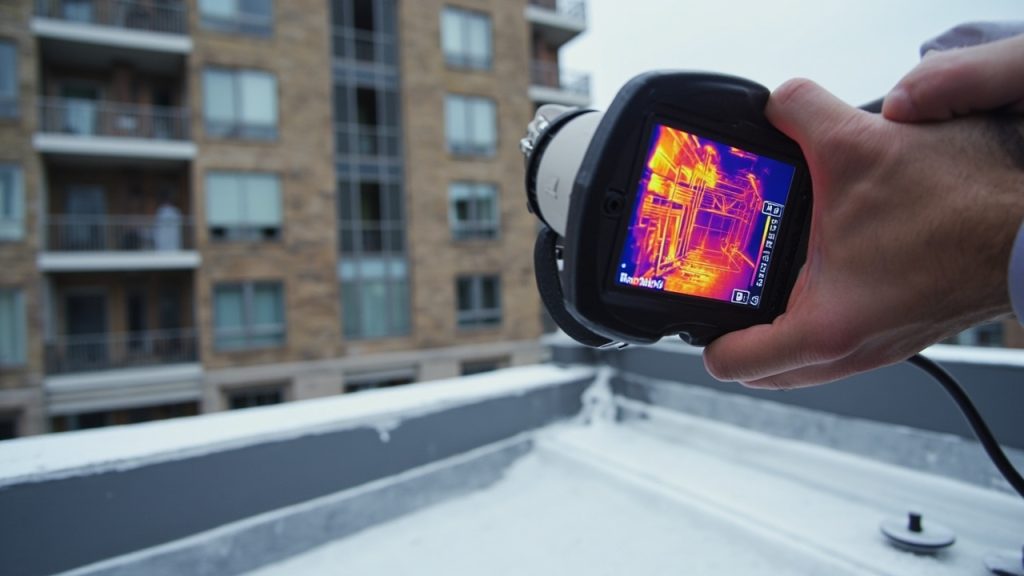
Infrared thermal imaging detects moisture beneath roof surfaces without destructive testing. This technology identifies wet insulation and membrane delamination that indicate developing problems.
Drone inspections provide safe access to large roof areas and identify problems in hard-to-reach areas. High-resolution cameras capture detailed images for documentation and analysis.
Moisture meters and core sampling provide quantitative data about roof assembly condition when problems are suspected but not visually apparent.
Reporting and Communication
Effective inspectors communicate findings clearly and provide actionable recommendations rather than overwhelming property managers with technical data.
Look for professionals who provide detailed written reports with photographs, prioritized recommendations, and clear cost estimates. Avoid contractors who provide verbal assessments without documentation.
Choose inspectors willing to explain findings in understandable terms and answer questions about recommended repairs and maintenance strategies.
Common Problems Found During Multi-Family Inspections
Understanding common issues helps landlords recognize problems during their own preliminary evaluations.
Membrane Deterioration
Flat roof membranes typically last 15-25 years depending on material quality and maintenance. EPDM and TPO membranes show cracking, splitting, and shrinkage as they age.
Look for exposed seams, tears around penetrations, and areas where the membrane pulls away from edges or equipment mounts. These problems worsen rapidly once they begin.
UV exposure accelerates membrane deterioration on south-facing roof areas. Buildings with minimal shade face faster degradation rates requiring more frequent replacement.
Drainage System Failures
Clogged or damaged drains create ponding water that accelerates roof deterioration. Even small drainage problems can cause major damage over time.
Check for standing water that remains more than 48 hours after rainfall. This indicates inadequate drainage requiring immediate attention.
Examine drain baskets and strainers for damage or deterioration. Missing or damaged components allow debris to enter drain lines, creating blockages.
Flashing and Perimeter Details
Roof edges, penetrations, and transitions between materials represent the most vulnerable areas in any roof system.
Look for separated or deteriorated flashing around chimneys, walls, and equipment curbs. These details require periodic resealing as sealants age and lose flexibility.
Examine expansion joints and termination bars where roof membranes meet walls or other materials. These connections require specific installation techniques to prevent water infiltration.
Maintenance Strategies for Long-Term Protection
Annual inspections form the foundation of effective roof maintenance, but ongoing attention prevents many problems from developing.
Seasonal Maintenance Schedule
Establish a seasonal maintenance schedule that addresses specific weather-related concerns throughout the year.
Spring maintenance should focus on repairing winter damage and preparing for spring rains. Clean all drains and gutters, repair any damage from ice or snow loads, and inspect for freeze-thaw damage.
Summer maintenance addresses UV damage and prepares for fall leaf accumulation. Check for membrane deterioration, clean debris from roof surfaces, and ensure all equipment functions properly.
Fall maintenance prepares for winter weather. Clean all drains and gutters thoroughly, inspect heating cables if installed, and address any problems before snow arrives.
Winter maintenance focuses on snow removal and ice dam prevention. Monitor roof loads during heavy snow events and ensure drainage systems remain functional.
Tenant Education and Cooperation
Educate tenants about roof safety and maintenance to prevent accidental damage and encourage reporting of problems.
Prohibit tenants from accessing roof areas without proper authorization and safety equipment. Many roof problems result from unauthorized access that damages membranes or creates new leak points.
Encourage tenants to report water stains, musty odors, or other signs of moisture problems immediately. Early reporting prevents minor problems from becoming major damage.
Provide clear procedures for reporting maintenance issues and responding promptly to tenant concerns demonstrates commitment to property maintenance.
Emergency Response Planning
Even with excellent maintenance, emergencies occasionally occur. Having a response plan minimizes damage and tenant disruption.
Emergency Contact Information
Maintain current contact information for all tenants, including emergency contacts for after-hours notification. Quick notification prevents damage escalation when problems occur during off-hours.
Establish relationships with emergency repair contractors who can respond quickly to urgent situations. Many roofing problems require immediate attention to prevent extensive damage.
Keep basic emergency repair materials on-site, including tarps, sealants, and temporary patching materials for immediate response to developing leaks.
Damage Control Procedures
Develop procedures for containing water damage when leaks occur. This includes moving tenant belongings, placing collection containers, and identifying the leak source quickly.
Train maintenance staff on basic leak isolation techniques and temporary repair methods. Quick response often prevents minor leaks from causing major damage.
Document all emergency repairs with photographs and written reports for insurance purposes and future maintenance planning.
Technology Integration for Modern Property Management
Modern technology improves inspection accuracy and maintenance efficiency for multi-family properties.
Digital Documentation Systems
Digital inspection platforms allow for consistent documentation and easy comparison between annual inspections. These systems create valuable historical records for maintenance planning.
Photo documentation with GPS tagging identifies exact problem locations for future reference. This technology proves especially valuable for large properties with multiple buildings.
Cloud-based maintenance management systems track repair history, schedule preventative maintenance, and generate reports for property owners and managers.
Predictive Maintenance Analytics
Data analysis helps predict when major repairs or replacement become necessary based on building age, material condition, and local weather patterns.
Track repair frequency and costs over time to identify when repair costs exceed replacement value. This analysis supports informed decisions about major capital investments.
Weather data integration helps predict when severe weather might cause damage, allowing for proactive preparation and post-event inspections.
Frequently Asked Questions
How often should I schedule professional roof inspections for my multi-family property?
Schedule professional inspections annually, with additional inspections after severe weather events or when tenants report water damage. Annual inspections catch developing problems before they cause major damage, while post-storm inspections identify weather-related damage requiring immediate attention.
What’s the typical cost range for a multi-family roof inspection in Cleveland?
Professional multi-family roof inspections typically cost between $500 and $2,000 depending on building size, complexity, and inspection scope. Small apartment buildings might cost $500-$800, while large complexes with multiple buildings can exceed $2,000. This investment prevents much larger emergency repair costs.
How long does a comprehensive multi-family roof inspection take?
Comprehensive inspections typically require 2-6 hours depending on building size and complexity. Small buildings might take 2-3 hours, while large complexes with multiple buildings can require full days. This includes interior unit access, exterior roof examination, and detailed documentation.
What qualifications should I look for in a multi-family roof inspector?
Look for contractors with specific multi-family and commercial roofing experience, proper licensing and insurance, positive references from similar properties, and knowledge of local building codes. Verify they use modern inspection technology like thermal imaging and provide detailed written reports with photographs.
How can I tell if my roof needs replacement versus repair?
Age, extent of damage, and repair history determine replacement versus repair decisions. Roofs over 20 years old with multiple leak locations, widespread membrane deterioration, or structural damage typically require replacement. Isolated problems in newer roofs usually allow for targeted repairs.
What are the most common causes of roof leaks in Cleveland multi-family buildings?
Common causes include ice damming, clogged drains, flashing failures, membrane deterioration, and equipment penetrations. Cleveland’s freeze-thaw cycles and lake-effect snow create unique challenges that require proper installation and regular maintenance to prevent.
How does Cleveland’s climate specifically affect multi-family roof maintenance?
Lake-effect snow creates heavy roof loads, freeze-thaw cycles cause material expansion and contraction, and high winds off Lake Erie create uplift forces. These factors require enhanced installation techniques, more frequent inspections, and prompt attention to developing problems compared to milder climates.
What should I do if I discover a roof leak during tenant occupancy?
Immediately contain water damage, notify affected tenants, and arrange emergency repairs. Document all damage with photographs, move tenant belongings if necessary, and file insurance claims promptly. Quick response prevents minor leaks from causing major damage and maintains tenant satisfaction.
Are there specific building code requirements for multi-family roofs in Cleveland?
Yes, Cuyahoga County requires ice and water shield extending at least 24 inches inside exterior walls, enhanced wind uplift resistance for buildings near Lake Erie, and specific insulation requirements for energy code compliance. Local municipalities may have additional requirements requiring proper permitting.
How can I prepare my tenants for an upcoming roof inspection?
Provide at least two weeks’ notice, explain the inspection process and duration, offer flexible scheduling for interior access, and communicate the importance of cooperation for building safety. Consider small incentives for tenant flexibility and maintain clear communication throughout the process.
- Schedule Professional Inspection
Contact qualified roofing contractors with multi-family experience and schedule inspection during optimal weather conditions, typically late spring or early fall.
- Coordinate with Tenants
Provide written notice to all tenants about inspection dates, access requirements, and expected duration. Offer flexible scheduling options for interior access.
- Prepare Documentation
Gather previous inspection reports, repair records, and warranty information. Document any current concerns or problem areas you’ve noticed.
- Ensure Safe Access
Clear roof access paths, secure any loose equipment or materials, and ensure all safety equipment is available for inspectors.
- Conduct Preliminary Assessment
Walk the property to identify obvious problems like standing water, debris accumulation, or visible damage before the professional inspection.
- Review and Implement Recommendations
Carefully review the inspection report, prioritize recommended repairs, and develop a maintenance plan for addressing identified issues.
Protect Your Investment with Professional Multi-Family Roof Inspections
Annual roof inspections represent one of the most important maintenance investments Cleveland landlords can make. These evaluations catch developing problems before they become catastrophic failures, protect tenant satisfaction, and preserve building value for years to come.
Don’t wait for water damage to appear inside your units. Schedule your annual multi-family roof inspection today and ensure your Cleveland property remains protected against our challenging weather conditions. The cost of prevention is always less than the cost of emergency repairs and tenant displacement.
Ready to protect your investment? Contact our experienced multi-family roofing specialists today for a comprehensive inspection that identifies problems early and provides clear recommendations for maintaining your building’s roof system. Your tenants and your bottom line will thank you.
{
“@context”: “https://schema.org”,
“@type”: “BlogPosting”,
“headline”: “What Cleveland Landlords Should Look for During an Annual Multi-Family Roof Inspection”,
“description”: “Essential guide for Cleveland landlords on annual multi-family roof inspections. Learn what to check, when to act, and how to protect your investment from Ohio weather damage.”,
“wordCount”: 3566,
“datePublished”: “2026-05-23T05:53:00.000Z”,
“dateModified”: “2026-05-23T05:53:00.000Z”,
“inLanguage”: “en-US”,
“mainEntityOfPage”: {
“@type”: “WebPage”,
“@id”: “https://alpharoofingcleveland.com”
},
“publisher”: {
“@type”: “LocalBusiness”,
“name”: “Alpha Roofing Cleveland”,
“url”: “https://alpharoofingcleveland.com”
},
“author”: {
“@type”: “Organization”,
“name”: “Alpha Roofing Cleveland”,
“url”: “https://alpharoofingcleveland.com”
},
“image”: {
“@type”: “ImageObject”,
“url”: “https://alpharoofingcleveland.com/wp-content/uploads/2026/03/what-cleveland-landlords-should-look-for-during-an-1.jpg”
}
}
{
“@context”: “https://schema.org”,
“@type”: “RoofingContractor”,
“name”: “Alpha Roofing Cleveland”,
“url”: “https://alpharoofingcleveland.com”,
“address”: {
“@type”: “PostalAddress”,
“addressLocality”: “Cleveland”
},
“areaServed”: {
“@type”: “City”,
“name”: “Cleveland”
}
}
{
“@context”: “https://schema.org”,
“@type”: “FAQPage”,
“mainEntity”: [
{
“@type”: “Question”,
“name”: “How often should I schedule professional roof inspections for my multi-family property?”,
“acceptedAnswer”: {
“@type”: “Answer”,
“text”: “Schedule professional inspections annually, with additional inspections after severe weather events or when tenants report water damage. Annual inspections catch developing problems before they cause major damage, while post-storm inspections identify weather-related damage requiring immediate attention.”
}
},
{
“@type”: “Question”,
“name”: “What’s the typical cost range for a multi-family roof inspection in Cleveland?”,
“acceptedAnswer”: {
“@type”: “Answer”,
“text”: “Professional multi-family roof inspections typically cost between $500 and $2,000 depending on building size, complexity, and inspection scope. Small apartment buildings might cost $500-$800, while large complexes with multiple buildings can exceed $2,000. This investment prevents much larger emergency repair costs.”
}
},
{
“@type”: “Question”,
“name”: “How long does a comprehensive multi-family roof inspection take?”,
“acceptedAnswer”: {
“@type”: “Answer”,
“text”: “Comprehensive inspections typically require 2-6 hours depending on building size and complexity. Small buildings might take 2-3 hours, while large complexes with multiple buildings can require full days. This includes interior unit access, exterior roof examination, and detailed documentation.”
}
},
{
“@type”: “Question”,
“name”: “What qualifications should I look for in a multi-family roof inspector?”,
“acceptedAnswer”: {
“@type”: “Answer”,
“text”: “Look for contractors with specific multi-family and commercial roofing experience, proper licensing and insurance, positive references from similar properties, and knowledge of local building codes. Verify they use modern inspection technology like thermal imaging and provide detailed written reports with photographs.”
}
},
{
“@type”: “Question”,
“name”: “How can I tell if my roof needs replacement versus repair?”,
“acceptedAnswer”: {
“@type”: “Answer”,
“text”: “Age, extent of damage, and repair history determine replacement versus repair decisions. Roofs over 20 years old with multiple leak locations, widespread membrane deterioration, or structural damage typically require replacement. Isolated problems in newer roofs usually allow for targeted repairs.”
}
},
{
“@type”: “Question”,
“name”: “What are the most common causes of roof leaks in Cleveland multi-family buildings?”,
“acceptedAnswer”: {
“@type”: “Answer”,
“text”: “Common causes include ice damming, clogged drains, flashing failures, membrane deterioration, and equipment penetrations. Cleveland’s freeze-thaw cycles and lake-effect snow create unique challenges that require proper installation and regular maintenance to prevent.”
}
},
{
“@type”: “Question”,
“name”: “How does Cleveland’s climate specifically affect multi-family roof maintenance?”,
“acceptedAnswer”: {
“@type”: “Answer”,
“text”: “Lake-effect snow creates heavy roof loads, freeze-thaw cycles cause material expansion and contraction, and high winds off Lake Erie create uplift forces. These factors require enhanced installation techniques, more frequent inspections, and prompt attention to developing problems compared to milder climates.”
}
},
{
“@type”: “Question”,
“name”: “Are there specific building code requirements for multi-family roofs in Cleveland?”,
“acceptedAnswer”: {
“@type”: “Answer”,
“text”: “Yes, Cuyahoga County requires ice and water shield extending at least 24 inches inside exterior walls, enhanced wind uplift resistance for buildings near Lake Erie, and specific insulation requirements for energy code compliance. Local municipalities may have additional requirements requiring proper permitting.”
}
},
{
“@type”: “Question”,
“name”: “How can I prepare my tenants for an upcoming roof inspection?”,
“acceptedAnswer”: {
“@type”: “Answer”,
“text”: “Provide at least two weeks’ notice, explain the inspection process and duration, offer flexible scheduling for interior access, and communicate the importance of cooperation for building safety. Consider small incentives for tenant flexibility and maintain clear communication throughout the process.”
}
}
]
}
{
“@context”: “https://schema.org”,
“@type”: “HowTo”,
“name”: “How to Prepare for Your Annual Roof Inspection”,
“step”: [
{
“@type”: “HowToStep”,
“position”: 1,
“name”: “Schedule Professional Inspection”,
“text”: “Contact qualified roofing contractors with multi-family experience and schedule inspection during optimal weather conditions, typically late spring or early fall.”
},
{
“@type”: “HowToStep”,
“position”: 2,
“name”: “Coordinate with Tenants”,
“text”: “Provide written notice to all tenants about inspection dates, access requirements, and expected duration. Offer flexible scheduling options for interior access.”
},
{
“@type”: “HowToStep”,
“position”: 3,
“name”: “Prepare Documentation”,
“text”: “Gather previous inspection reports, repair records, and warranty information. Document any current concerns or problem areas you’ve noticed.”
},
{
“@type”: “HowToStep”,
“position”: 4,
“name”: “Ensure Safe Access”,
“text”: “Clear roof access paths, secure any loose equipment or materials, and ensure all safety equipment is available for inspectors.”
},
{
“@type”: “HowToStep”,
“position”: 5,
“name”: “Conduct Preliminary Assessment”,
“text”: “Walk the property to identify obvious problems like standing water, debris accumulation, or visible damage before the professional inspection.”
},
{
“@type”: “HowToStep”,
“position”: 6,
“name”: “Review and Implement Recommendations”,
“text”: “Carefully review the inspection report, prioritize recommended repairs, and develop a maintenance plan for addressing identified issues.”
}
],
“image”: “https://alpharoofingcleveland.com/wp-content/uploads/2026/03/what-cleveland-landlords-should-look-for-during-an-1.jpg”
}
{
“@context”: “https://schema.org”,
“@type”: “BreadcrumbList”,
“itemListElement”: [
{
“@type”: “ListItem”,
“position”: 1,
“name”: “Home”,
“item”: “https://alpharoofingcleveland.com”
},
{
“@type”: “ListItem”,
“position”: 2,
“name”: “Blog”,
“item”: “https://alpharoofingcleveland.com/blog”
},
{
“@type”: “ListItem”,
“position”: 3,
“name”: “What Cleveland Landlords Should Look for During an Annual Multi-Family Roof Inspection”
}
]
}
{
“@context”: “https://schema.org”,
“@type”: “Service”,
“serviceType”: “Roofing”,
“provider”: {
“@type”: “LocalBusiness”,
“name”: “Alpha Roofing Cleveland”,
“url”: “https://alpharoofingcleveland.com”
},
“areaServed”: {
“@type”: “City”,
“name”: “Cleveland”
},
“description”: “Essential guide for Cleveland landlords on annual multi-family roof inspections. Learn what to check, when to act, and how to protect your investment from Ohio weather damage.”
}
For more information, visit FEMA.